
Product Description
Factory Manufactory Industrial Large Conveyor Chain Ca550 Agricultural Machine Chain Drive Wheel Hub Agricultural
Products Description
Stainless steel chains are widely used in food processing, pharmaceutical, chemical production, rubber processing, non-ferrous metal smelting, electronic equipment, environmental protection equipment and heat treatment equipment and other fields of mechanical transmission and conveying equipment.
Traction chains are widely used in forklifts, CHINAMFG stackers, textile machinery, parking garages, drilling rigs, aerial work platforms, pipe benders, etc.
Drive chains are mainly used to transmit power and are widely used in agricultural machinery, construction machinery, escalator drive, logistics and packaging machinery industries.
Conveyor chain is widely used in food, wood and paper, logistics, packaging machinery, building materials machinery, environmental protection equipment and other industries for material conveying
Details Images
Agricultural Machinery Chain
Agricultural machinery chains are mainly used in rice, wheat, corn, cotton and other agricultural machinery to provide driving and conveying functions to realize the mechanization of the whole process of agricultural production from plowing, sowing to harvesting.
Conveyor chain
Conveyor chain products are characterized by high strength, wear resistance, high precision, corrosion resistance, temperature resistance, etc. to meet the needs of efficient, smooth and reliable conveying
Drive chains
The transmission chain adopts high-quality raw materials and advanced technology to develop a series of high-end chain transmission products with high wear resistance, high fatigue strength and high precision.
Product Paramenters
Company Profile
SFR Chain Group has been excelling at manufacturing and innovating motorcycle and industrial chain since 1991,always focusing on high quality and innovation to stay in the pole position of the industry.
SFR operates 4 fully owned factories and 1 joint venture, certified by ISO9002, ISO9001 and ISO/TS16949 Quality Management System.
SFR offers over 2000 series, which are exported to over 60 countries all over the World, and are widely used in variety of fields. Such as agricultural machines, motorcycles, metallurgy, wood processing, or food and beverage processing, among others. We at SFR Chain always adhere to the group’s spirit of integrity, efficiency and innovation:”We strive to offer the best products and service to our customers”
SFR is a global professional supplier focusing on chain drive solutions, with famous chain drive brands such as SFR, SUNFUN, MOTOMAX, EP and TVH.
Our commitment to R&D led SFR to establish atable cooperation with several ell-known universities and research institutes in China, as well as setting up an Intelligent Chain Drive Research Center within the group, altogether resulting in its more than 70 patents. This allows us to offer the widest range of power transmission and conveyor chain at the most competitive prices.
Since 1991, it has become a leading company in the chain industry with 5 production bases, about 110,000 square CHINAMFG of factory space, more than 180 patents, more than 2,000 chain varieties, more than 8,000 product specifications,exports to more than 80 countries worldwide. Products are widely used in many fields such as logistics and conveying, food industry, petroleum industry, engineering machinery, lifting equipment, packaging machinery processing, environmental protection equipment, tobacco machinery, etc.
Factory equipment
SFR will continue to increase the investment in manufacturing, R&D, follow the wave of Industry 4.0, continuously improve the company’s technology, product, marketing and brand power, enhance the company’s comprehensive strength, and provide customers with better chain drive solutions.
High-speed punching of industrial chain plates Automatic high-speed punching, high efficiency, high precision, and good sound insulation and environmental protection measures.
Motorcycle chain automatic assembly line The chain automatic assembly line integrates the processes of parts loading, chain assembly, automatic detection, pre-stretching, head riveting, and oiling to achieve the real automatic and efficient agricultural chain automatic assembly.
Automatic assembly line for agricultural chains Using the design of electromechanical integration, the mechanical mold and pneumatic and hydraulic parts are effectively combined together to realize the automatic assembly of complex structure chains.
Testing Machine
SFR Chain currently has 5 manufacturing plants covering over 50,000 square CHINAMFG and employing nearly 1,000 people. We bring in top talent and some of the manufacturing equipment used for manufacturing and inspection to provide the highest quality standards and create effective economies of scale.
Recommend Products
/* January 22, 2571 19:08:37 */!function(){function s(e,r){var a,o={};try{e&&e.split(“,”).forEach(function(e,t){e&&(a=e.match(/(.*?):(.*)$/))&&1
| Standard or Nonstandard: | Standard |
|---|---|
| Application: | Textile Machinery, Garment Machinery, Conveyer Equipment, Packaging Machinery, Electric Cars, Motorcycle, Food Machinery, Marine, Mining Equipment, Agricultural Machinery, Car |
| Surface Treatment: | Electroplating, Zinc Plating |
| Structure: | Roller Chain, Hollow Chain |
| Material: | Stainless Steel, Alloy |
| Type: | Roller Chain, Double Pitch Chain |
| Samples: |
US$ 2/Piece
1 Piece(Min.Order) | |
|---|
| Customization: |
Available
| Customized Request |
|---|
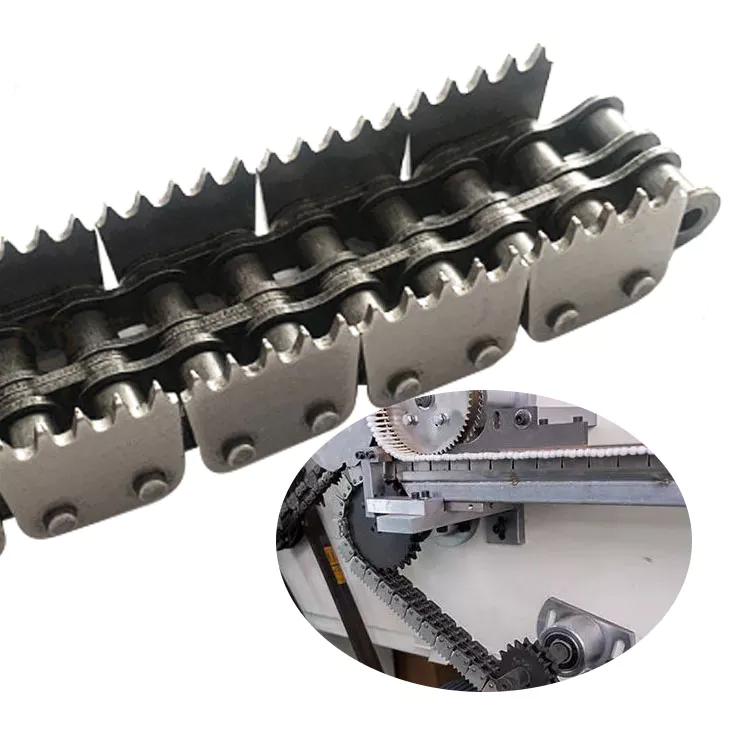
What are the benefits of using a silent conveyor chain?
A silent conveyor chain, also known as a noise-reducing conveyor chain, offers several advantages in conveyor system applications:
1. Noise Reduction:
– One of the primary benefits of using a silent conveyor chain is the significant reduction in noise levels. These chains are specifically designed to minimize the noise generated during operation, creating a quieter and more comfortable working environment.
2. Improved Work Environment:
– By reducing noise levels, a silent conveyor chain contributes to a better work environment, particularly in settings where noise reduction is important, such as manufacturing facilities, warehouses, and distribution centers. It helps reduce employee fatigue, enhances communication, and improves overall worker satisfaction.
3. Compliance with Noise Regulations:
– In some industries or regions, there are specific noise regulations that must be met. Using a silent conveyor chain helps ensure compliance with these regulations, avoiding potential penalties and legal issues.
4. Increased Productivity:
– A quieter working environment created by a silent conveyor chain can lead to increased productivity. With reduced noise distractions, employees can focus better on their tasks, resulting in improved efficiency and output.
5. Extended Chain and Equipment Life:
– Silent conveyor chains are often designed with advanced materials and technologies that offer enhanced wear resistance and durability. They can withstand heavy loads, reduce friction, and minimize wear and tear on both the chain and the associated equipment, resulting in longer service life and reduced maintenance costs.
6. Versatility:
– Silent conveyor chains are available in various configurations and designs, making them compatible with a wide range of conveyor systems and applications. They can be used in different industries, including automotive, food processing, packaging, and more.
When considering a silent conveyor chain, it is important to consult with a reputable chain manufacturer or supplier to ensure the chain meets the specific requirements of the application.
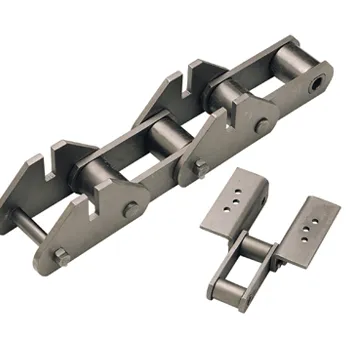
How does a conveyor chain impact material flow in a production line?
A conveyor chain plays a crucial role in facilitating the smooth and efficient flow of materials in a production line. Here are the key ways in which a conveyor chain impacts material flow:
1. Continuous Movement: A conveyor chain enables continuous movement of materials along the production line. By securely holding and transporting the materials, the chain ensures a consistent flow without interruptions or delays.
2. Speed Control: The speed at which the conveyor chain moves can be adjusted to match the desired production rate. This allows for precise control over the material flow, ensuring that it aligns with the downstream processes and avoids bottlenecks or overloading.
3. Orientation and Positioning: Conveyor chains can be designed with specific attachments or fixtures to orient and position materials in a desired manner. This ensures that the materials are presented correctly for processing, assembly, or packaging, optimizing the overall production flow.
4. Sorting and Diverging: In certain applications, conveyor chains can be equipped with mechanisms for sorting or diverging materials based on predetermined criteria. This allows for efficient routing of different products or components to their respective destinations, streamlining the material flow.
5. Accumulation and Buffering: Conveyor chains can incorporate accumulation zones or buffering areas where materials can temporarily pause or accumulate. This feature is useful when downstream processes experience temporary disruptions or when there is a need to balance the flow between different production stages.
6. Integration with Equipment: Conveyor chains can be integrated with other equipment or machines in the production line, such as robotic arms, automated packaging systems, or inspection stations. This seamless integration enables synchronized material handling, optimizing the flow and efficiency of the entire production process.
7. Customization for Specific Needs: Conveyor chains can be customized to meet specific material handling requirements. This includes considerations such as chain width, length, height adjustments, inclines or declines, and specialized attachments or guides. Such customization ensures that the material flow is tailored to the unique needs of the production line.
By providing a reliable and controlled method of transporting materials, a conveyor chain significantly influences the material flow in a production line. It enhances productivity, reduces manual handling, minimizes the risk of errors or damage, and ultimately contributes to the overall efficiency and success of the manufacturing process.

How does a conveyor chain compare to other types of conveyor systems?
Conveyor chains are one of the common types of conveyor systems used in various industries. They offer specific advantages and characteristics that differentiate them from other types of conveyor systems.
1. Versatility: Conveyor chains are highly versatile and can be used for a wide range of applications, including horizontal, inclined, and vertical conveying. They can handle various types of materials, from bulk solids to individual items.
2. High Load Capacity: Conveyor chains are known for their high load-carrying capacity. They are designed to handle heavy loads and can be used in applications where other conveyor systems may not be suitable.
3. Durability: Conveyor chains are built to withstand harsh operating conditions and heavy-duty use. They are made from strong and durable materials, such as steel or alloy, that can withstand abrasion, impact, and wear.
4. Flexibility: Conveyor chains offer flexibility in terms of layout and design. They can be configured to accommodate complex conveyor paths, curves, and multiple discharge points, allowing for efficient material flow and system customization.
5. Cost-Effective: Conveyor chains often provide a cost-effective solution for material handling compared to other conveyor systems. They have a relatively low initial cost, require less maintenance, and have a longer service life.
However, it’s important to note that conveyor chains may not be suitable for every application. Other types of conveyor systems, such as belt conveyors, screw conveyors, or pneumatic conveyors, may offer specific advantages depending on the application requirements, material characteristics, or environmental factors.
Ultimately, the selection of the appropriate conveyor system depends on factors such as load capacity, material properties, layout constraints, cost considerations, and specific application needs.


editor by CX 2024-05-06