Description
Product Overview
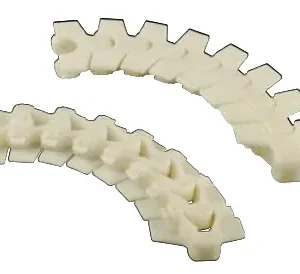
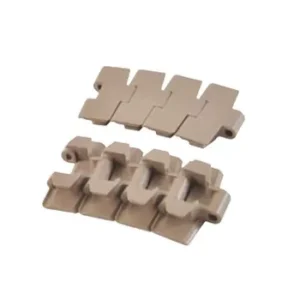
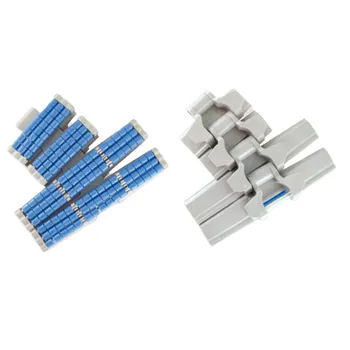
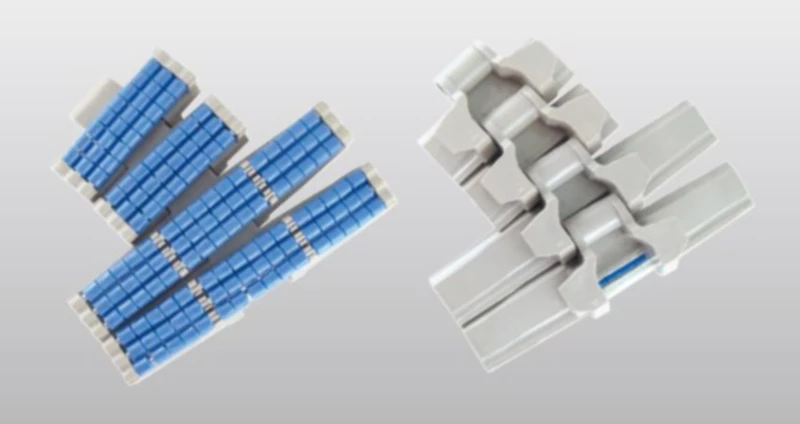
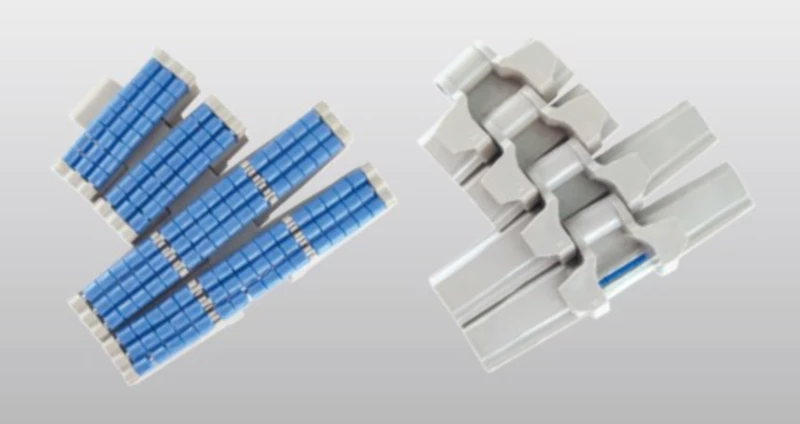
The sideflexing flat-top chain with low-noise accumulation rollers combines two advanced design features into a single chain: the lateral flexibility to navigate horizontal curves without separate curve units, and the roller-equipped top surface that eliminates sliding friction during product accumulation. Standard sideflexing chains handle curves well but generate full sliding back-pressure when product accumulates. Standard roller chains reduce back-pressure on straight runs but cannot curve. The LBP882TAB series solves both problems simultaneously — enabling curved accumulation zones, curved buffer sections, and curved dead-plate transfers on high-throughput lines without the back-pressure damage that standard chains would cause in these geometries. EverPower plastic chain Australia supplies the LBP882TAB series as a direct replacement for System Plast equivalents.
The LBP882TAB designation encodes the full specification: LBP = low back-pressure (roller surface); 882 = the 882 sideflexing chain body family; TAB = tab-link sideflexing geometry for minimum inner bend radius. This combination is specified on bottling and canning accumulation lines where the conveyor path includes at least one horizontal curve within or adjacent to the accumulation zone — a layout increasingly common in compact modern filling halls where floor space constraints require curved accumulation buffers.
The Case for Curved Accumulation Zones
Linear accumulation zones require the conveyor to extend straight from the accumulation entry point to the downstream stop — a geometry that demands clear floor space in a single direction. In compact filling halls, breweries, and multi-lane packaging facilities, this straight-line requirement frequently conflicts with walls, pillars, adjacent conveyor lines, and process equipment. The traditional solution is to divert product from the main conveyor into a separate straight accumulation spur — requiring divert gates, spur conveyors, and remerge gates that add capital cost, maintenance items, and potential jam points to the system.
The LBP882TAB allows the accumulation zone itself to curve around obstacles. A 90° curved accumulation buffer of 3–5 metres total length can be built within a fraction of the floor space required by a straight spur of equivalent capacity. At typical beverage bottle weights of 0.5–1.5 kg per bottle and line speeds of 40–60 m/min, the LBP882TAB maintains back-pressure below 8 N on a 3-metre curved accumulation zone — below the threshold for base deformation on standard-wall PET bottles.
LBP882TAB Width Range and Performance Data
| Width (K) | Chain Series | Min. Bend Radius | Max Speed (dry) | Roller Type | Back-Pressure CoF |
|---|---|---|---|---|---|
| K325 | LBP882TAB | ~450 mm | 60 m/min | POM low-noise | 0.01–0.03 |
| K450 | LBP882TAB | ~450 mm | 60 m/min | POM low-noise | 0.01–0.03 |
| K600 | LBP882TAB | ~500 mm | 60 m/min | POM low-noise | 0.01–0.03 |
| K750 | LBP882TAB | ~550 mm | 60 m/min | POM low-noise | 0.01–0.03 |
| K1000 | LBP882TAB | ~600 mm | 50 m/min | POM low-noise | 0.01–0.03 |
Tab-Link Geometry for Tight-Radius Curve Performance
The TAB link designation in LBP882TAB means the chain uses alternating tab-profile links at defined intervals to achieve tighter minimum bend radii than the standard bevel-edge 882 sideflexing chain allows. The tab link’s narrower profile permits a greater lateral flex angle per link before the tab geometry contacts adjacent links — extending the minimum achievable curve radius inward to approximately 450–600 mm depending on chain width, compared to approximately 600–800 mm for the equivalent bevel-edge series.
At the minimum bend radius, the roller top surface continues to function correctly — the rollers rotate freely even when the chain is in the fully flexed position on the curve. This is an important design point: on early roller accumulation chains using rigid top-plate geometry, roller function degraded at tight curves because the link plate flexing created binding between the roller axle and its mounting bore. The LBP882TAB’s link geometry accommodates full roller rotation at the minimum design radius without binding.
Noise Reduction on Curved Accumulation Zones
Curved accumulation zones present a specific noise source beyond the back-pressure sliding noise of standard flat-top accumulation: the lateral guide rail side force on the outer radius of the curve creates additional sliding friction between the chain body and the guide rail wall. On a standard sideflexing chain at 60 m/min with a 500 mm inner radius and a 10 kg/m product load, the lateral force on the outer guide rail can reach 15–25 N per metre of curve — generating measurable squealing noise as the chain slides laterally against the rail.
The LBP882TAB’s POM roller top surface does not directly reduce this lateral friction, which is governed by the chain body geometry rather than the top surface. However, the reduction in back-pressure on the curve allows the chain to run at lower chain tension overall, reducing the normal force that drives lateral chain-to-guide-rail friction. The combined effect — lower back-pressure plus lower chain tension — typically reduces total accumulation zone noise by 4–8 dB(A) compared to a standard sideflexing flat-top chain in the same curved accumulation application.
Matched Components EverPower Also Supplies
| Component | Description | Availability |
|---|---|---|
| LBP882TAB Curve Sprockets | Matched tooth profile and width, inner/outer curve | ✓ On request |
| Inner/Outer Radius Guide Rails | Aluminium, all K-widths, for TAB chain | ✓ On request |
| Replacement POM Rollers | Individual roller and axle assemblies | ✓ On request |
| LBP821 / LBP831 Straight Roller Chain | For straight sections of same accumulation system | ✓ In stock |
What Our Customers Say
“LBP882TAB K450 on a 90° curved accumulation buffer for our 500 ml PET water line. The curved buffer fits within the floor plan that a straight buffer could not. Back-pressure damage — which we had on the previous standard sideflexing chain — has not occurred once in seven months. The roller surface works exactly as advertised through the curve.”
— Conveyor Engineer, Bottled Water Producer, Sydney NSW
“We use LBP882TAB K600 on a curved dead-plate transfer section where space constraints forced a 30° offset between the upstream and downstream conveyors. The roller surface eliminates the bottle base scuffing we had at the transfer gap with standard sideflexing chain. Cosmetic rejection at this station dropped from 1.2% to essentially zero.”
— Quality Manager, Beverage Packaging, Melbourne VIC
“The noise reduction in our curved accumulation zone was noticeable before we even measured it. The sound survey put it at 6 dB(A) lower than the previous chain — enough for that section to move below our monitoring threshold. Less maintenance paperwork, quieter line, no back-pressure damage. This is the right chain for a curved accumulation application.”
— Plant Manager, FMCG Bottling, Brisbane QLD