
Product Description
HangZhou Terry Machinery supply all linear guideway ,linear guides, ball screw,kinds of bearings,
chain and sprocket,fitness parts ,outboard engine and so on.
Material choices:Carbon steel,40Mn ,C45 steel,304 stainless steel, 316 stainless steel and 201 stainless steel.
We accept customization!!!
Rice harvester chain: sharp top tooth chain, lifting chain/hoisting chains and short pitch precision roller drive chain Corn combine harvester and cotton picker chains: combine harvester chains and accessories, cotton picker chains and precision roller chains for various drives Other kinds of agricultural machinery chains: steel pin chain, O – ring chain and other special agricultural machinery chains and accessories.This chain can be used for wheat, rice, corn, and coconut harvesters and tractors.
We supply all kinds of different mode stainless steel&carbon steel roller chain, such as A&B short pitch single
/ duplex / triplex roller chain , heavy duty roller chain ,side bow chain , window open chain ,plastic engine chain ,
leaf chain,jelly machine chain ,packing machine chain, hollow pin chain ,mesh belt chain , palm oil chain , oil chain,
hoisting chains ,escalator chain, double picth conveyor roller chain, agricultural chains, sprockets, gears,wheels and so on;
We accept customization!!!
Excellent quality and favorable price to you. Welcome to your inquiry~
|
DIN/ISO |
Pitch |
Roller |
Width |
Pin |
Plate |
Average |
weight |
|
KIN/ISO |
|
|
between |
diameter |
thick |
tensile |
per |
|
Chain |
|
|
inner plates |
|
-ness |
strength |
meter |
|
No. |
P |
d1 |
b1 |
d2 |
T |
Q0 |
q |
|
|
max |
min |
max |
max |
|||
|
|
mm |
mm |
mm |
mm |
mm |
kN |
kg/m |
|
*25H |
6.35 |
3.3 |
3.18 |
2.31 |
1.04 |
5.5 |
0.17 |
|
*219H |
7.774 |
4059 |
5 |
3.01 |
1.2/1.0 |
7.4 |
0.28 |
|
*270H |
8.5 |
5 |
4.75 |
3.28 |
1.8/1.4 |
11 |
0.33 |
|
*T3F |
9.525 |
6 |
9.5 |
4.5 |
1.85/1.48 |
14.1 |
0.61 |
|
420 |
12.7 |
7.77 |
6.25 |
3.96 |
1.5 |
18.1 |
0.55 |
|
428 |
12.7 |
8.51 |
7.75 |
4.45 |
1.6 |
20.1 |
0.7 |
|
428H |
12.7 |
8.51 |
7.85 |
4.45 |
2.03 |
23.4 |
0.79 |
|
428DS |
12.7 |
8.51 |
7.94 |
4.45 |
1.85 |
21 |
0.76 |
|
520 |
15.875 |
10.16 |
6.25 |
5.08 |
2.03 |
29.7 |
0.89 |
|
520H |
15.875 |
10.16 |
6.25 |
5.08 |
2.42 |
31.5 |
1.1 |
|
530 |
15.875 |
10.16 |
9.4 |
5.08 |
2.03 |
29.7 |
1.06 |
PACKAGEHangZhou Terry Machinery Co.Ltd is a leading supplier of bearings, Outboard engine&parts,Linear
motion system for CNC , Ball transfer Unit and transmission component .the growing industrial and
Favorable policy of HangZhou benefit the development of Terry Machinery .Our products are utilized
in industrial, motorcycle, vehicle and Automation applications. Now we are exporting to 46 countries.
including USA, GBR , Germany , Spain, Poland ,Turkey ect .The Goal of Terry Machinery to provide
out customers with widest range of products at competitive prices, backed with the best Service.
OUR ADVANTAGE Products Our major products & Supplied:Meet all the international standards and
ISO9001 -TS1694 Certificate Big volume in Stock, No MOQ required Personnel Our salespersons
are well trained to accommodate your requests and speak English for your conveniences.
Our technicians and engineers Experience in the Industry area exceeds 23 years Service &Quality
control ,We supply detailed drawings and offer when ever necessary,We help all customers promote
and improve their sales.We inspect every piece of products by ourselves before delivery.
/* January 22, 2571 19:08:37 */!function(){function s(e,r){var a,o={};try{e&&e.split(“,”).forEach(function(e,t){e&&(a=e.match(/(.*?):(.*)$/))&&1
| Standard or Nonstandard: | Standard |
|---|---|
| Application: | Textile Machinery, Conveyer Equipment, Packaging Machinery, Motorcycle, Food Machinery, Mining Equipment, Agricultural Machinery, Car, Transportation |
| Surface Treatment: | Shot Blasting, Dacromet, etc. |
.shipping-cost-tm .tm-status-off{background: none;padding:0;color: #1470cc}
| Shipping Cost:
Estimated freight per unit. |
about shipping cost and estimated delivery time. |
|---|
| Payment Method: |
|
|---|---|
|
Initial Payment Full Payment |
| Currency: | US$ |
|---|
| Return&refunds: | You can apply for a refund up to 30 days after receipt of the products. |
|---|
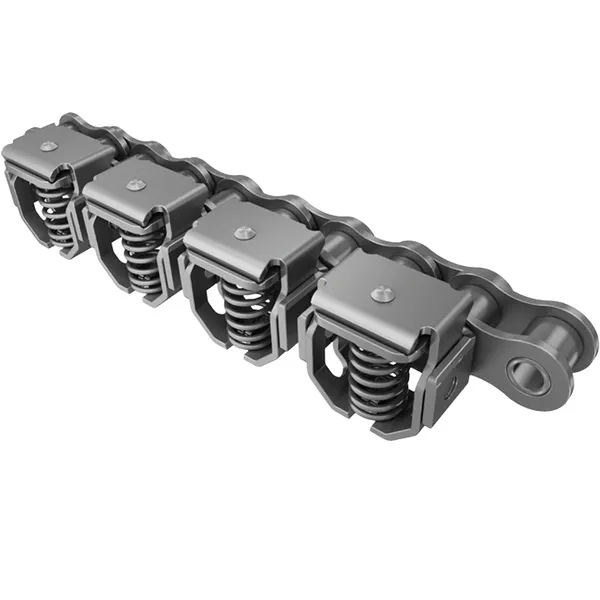
What are the benefits of using a self-lubricating conveyor chain?
Self-lubricating conveyor chains offer several advantages over traditional lubricated chains. Here are some key benefits:
1. Reduced Maintenance: Self-lubricating chains eliminate the need for regular lubrication, reducing the time and effort required for maintenance. This is particularly beneficial in applications where access to the chain is difficult or time-consuming.
2. Cost Savings: By eliminating the need for external lubrication, self-lubricating chains can help reduce lubrication costs over the lifetime of the chain. This includes the cost of lubricants, as well as the labor and equipment required for lubrication maintenance.
3. Clean and Environmentally Friendly: Self-lubricating chains do not require external lubricants, resulting in a cleaner working environment. There is no risk of lubricant spills or contamination of the surrounding area, making them ideal for applications that require strict cleanliness standards, such as food processing or pharmaceutical industries.
4. Extended Chain Life: Self-lubricating chains are designed with built-in lubrication systems that provide a continuous and controlled supply of lubricant to the chain components. This helps reduce friction, wear, and heat generation, resulting in longer chain life and improved performance.
5. Improved Reliability: With consistent and reliable lubrication, self-lubricating chains maintain optimal performance and minimize the risk of chain failure or breakdown. They are less susceptible to premature wear, elongation, and corrosion, ensuring a more reliable and efficient conveyor system.
It’s important to note that the specific benefits of self-lubricating chains may vary depending on the manufacturer and the design of the chain. It’s recommended to consult with the chain manufacturer or an industry expert to understand the suitability and advantages of self-lubricating chains for a particular application.
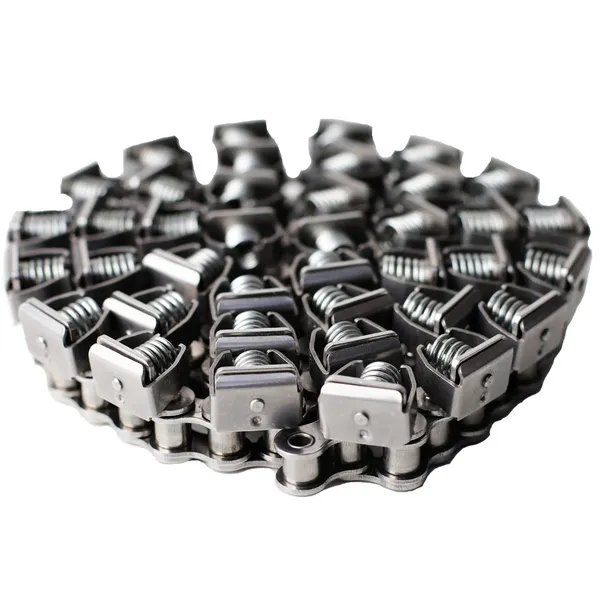
How do you calculate the power requirements for a conveyor chain?
Calculating the power requirements for a conveyor chain involves considering various factors. Here’s a step-by-step process:
1. Determine the total weight to be transported: Measure or estimate the total weight of the material or product that will be carried by the conveyor chain. This includes the weight of the product itself, any packaging, and additional loads.
2. Determine the speed of the conveyor: Determine the desired speed at which the conveyor chain will operate. This is typically measured in feet per minute (FPM) or meters per second (m/s).
3. Calculate the required capacity: Multiply the total weight by the desired speed to determine the required capacity of the conveyor system. This will give you the weight per unit of time (e.g., pounds per minute or kilograms per hour).
4. Consider the conveyor’s design factors: Take into account various design factors such as the type and pitch of the conveyor chain, the coefficient of friction between the chain and the conveyor components, and any incline or decline angles of the conveyor system. These factors affect the power requirements.
5. Determine the required power: Use the following formula to calculate the power requirements:
Power (in horsepower) = (Capacity × Friction Factor) ÷ (33,000 × Efficiency)
Where:
– Capacity is the weight per unit of time (from step 3)
– Friction Factor is the ratio of chain tension to chain weight, taking into account the design factors
– 33,000 is a conversion factor to convert the units to horsepower
– Efficiency is the overall efficiency of the conveyor system, typically expressed as a decimal value (e.g., 0.95 for 95% efficiency)
6. Select a suitable motor: Based on the calculated power requirements, select a motor that can provide the necessary power to drive the conveyor chain. Consider factors such as motor type, motor efficiency, and overload capacity.
It’s important to note that the power requirements may vary depending on specific conveyor system designs and operating conditions. Consulting with a qualified engineer or conveyor manufacturer is recommended to ensure accurate calculations and proper motor selection.

What factors should be considered when designing a conveyor chain system?
When designing a conveyor chain system, several factors need to be considered to ensure optimal performance and functionality. These factors include:
- Load Capacity: The load capacity of the conveyor chain system is a critical consideration. It involves determining the maximum weight and size of the materials or products to be conveyed. This information helps in selecting the appropriate chain type, size, and strength to handle the expected load.
- Speed and Throughput: The desired speed at which the conveyor system needs to operate and the expected throughput of materials are important factors. They influence the selection of chain pitch, sprocket size, and motor power to achieve the desired conveyor speed and material handling capacity.
- Environmental Conditions: The operating environment plays a crucial role in the design of a conveyor chain system. Factors such as temperature, humidity, dust, corrosive substances, and presence of water or chemicals impact the selection of materials for the chain, sprockets, and other components to ensure durability and resistance to wear and corrosion.
- Conveyor Layout and Configuration: The layout and configuration of the conveyor system are key considerations. Factors such as available space, conveyor path, incline or decline angles, and any required curves or turns affect the selection of chain type, sprocket arrangement, and overall system design.
- Maintenance and Accessibility: Easy access for maintenance and servicing is crucial for the longevity and efficient operation of the conveyor chain system. Considering factors such as lubrication points, chain tension adjustment mechanisms, and overall accessibility for inspections and repairs ensures smooth operation and minimizes downtime.
- Noise and Vibration: The level of noise and vibration generated by the conveyor chain system can impact the working environment. Design considerations such as selecting chain types with low noise characteristics, implementing proper lubrication, and using vibration-damping components help minimize noise and vibration levels.
- Safety: Safety is of paramount importance in conveyor chain system design. Factors such as guarding, emergency stop systems, proper alignment, and anti-slip measures need to be incorporated to ensure the safety of operators and prevent accidents or injuries.
Considering these factors during the design stage helps in selecting the appropriate conveyor chain type, size, and configuration to meet the specific requirements of the application, ensuring smooth and efficient material handling operations.


editor by CX 2024-04-12