Description
Product Overview
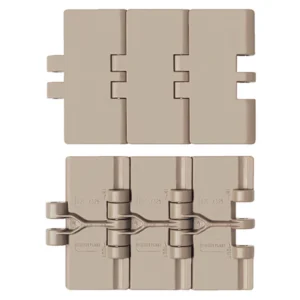
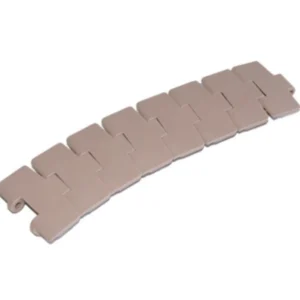
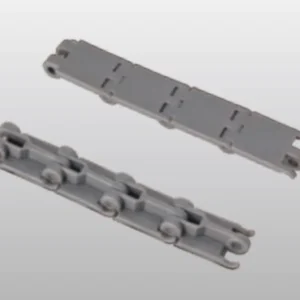
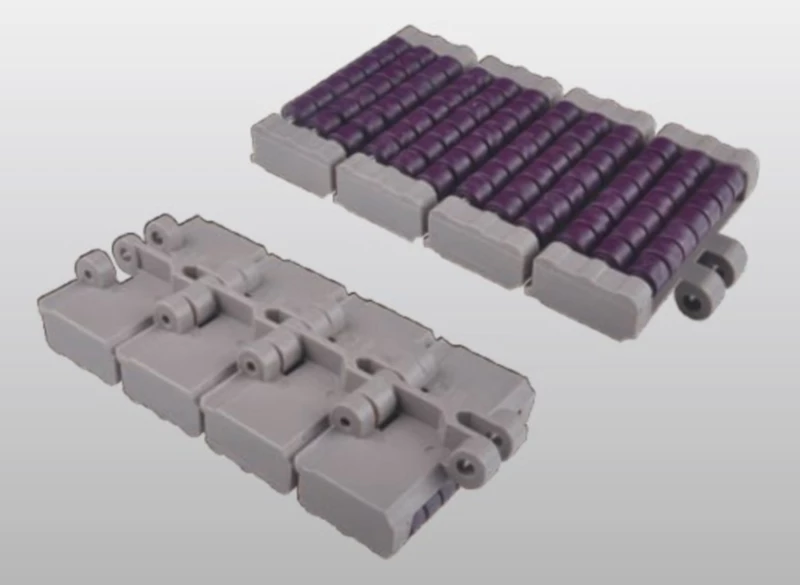
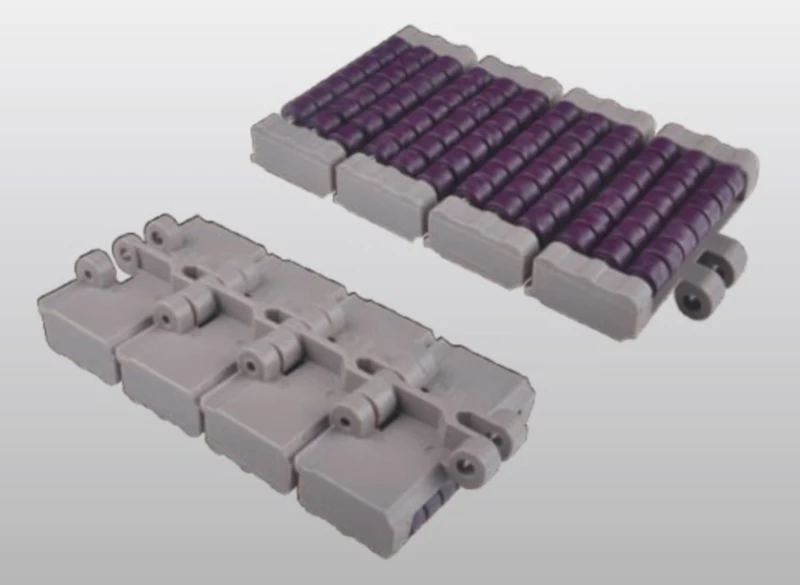
The LBP831-K325 is a width-specific product page for the LBP831 single hinge flat top chain with low-noise accumulation rollers at K325 chain width — one of the most commonly ordered widths in the LBP831 series. The LBP831 uses the LF831 single hinge chain body (the wider-plate variant of the LF820 family) with POM rollers projecting above each link plate, replacing sliding contact with rolling contact during product accumulation. At K325 width, this chain handles single-file beverage bottle accumulation, single-file can accumulation, and narrow-format carton accumulation zones — the most common accumulation scenarios in Australian beverage and food production. EverPower plastic chain Australia Pty Ltd supplies the LBP831-K325 as a direct replacement for System Plast LBP831 at K325 width, with maximum conveyor run 12 m, working load 2,750 N, operating temperature −40 °C to +90 °C, and standard packing 10 ft per box at 26 links per metre.
The 2,750 N working load of the LBP831 is notably higher than the 2,000 N limit of the LBP820 roller chain covered in earlier product pages — reflecting the LF831’s wider link plate body which provides a larger tensile cross-section than the LF820 body at equivalent K-widths. This higher load rating and the extended 12 m maximum run (vs 9 m for LBP820) make the LBP831 the preferred specification for longer accumulation zones and heavier product loads within the single hinge roller chain family. Visit the About Us page for more on EverPower’s supply capability.
K325 Width: The Application Envelope
The K325 width designation covers the most common single-file accumulation scenarios in Australian food and beverage manufacturing. At K325, the chain 325 mm effective width accommodates single-file conveying of product footprints from approximately 50 mm to approximately 280 mm base diameter — covering 250 ml cans, 300–600 ml PET bottles, standard wine and spirits bottles, and small carton formats such as 250 ml juice cartons and 300 g condiment boxes.
Single-file accumulation at K325 is the dominant application: product is presented to a downstream stop (a gate, a diverter, or a filling station) in a single column at rated line speed. As the column builds up, the LBP831-K325 rollers allow the chain to continue at drive speed under the accumulated product mass without generating the back-pressure that would deform bottles or tip lightweight cartons. A 3-metre accumulation zone at K325 with a product load of 8 kg/m generates approximately 24 N of back-pressure on standard flat top chain (CoF 0.20 × 8 kg/m × 9.8 m/s² × 3 m = approximately 47 N) and only 2.4–4.7 N on the LBP831 roller chain (CoF 0.01–0.02) — a 90–95% reduction.
Technical Specifications — LBP831 at K325
| Parameter | Value |
|---|---|
| Chain series | LBP831 (single hinge, 831 wide-plate body) |
| Width designation | K325 (325 mm) |
| Roller material | POM low-noise roller on POM axle boss |
| Back-pressure CoF | 0.01–0.02 |
| Back-pressure reduction vs flat top | ~90–95% |
| Max. conveyor run | 12 m |
| Working load | 2,750 N |
| Max. speed (dry) | 60 m/min |
| Operating temperature | −40 °C to +90 °C |
| Pitch | 25.4 mm |
| Links per metre | 26 |
| Packing | 10 ft / box |
Why LBP831 Rather Than LBP820 at K325?
Both the LBP820 and LBP831 are available at K325 width. The selection between them involves two meaningful differences. First, the LBP831 wider link plate (the 831 body versus the 820 body) provides a larger top surface area per link — at K325, this means slightly more continuous roller contact surface supporting the product, which is beneficial for containers with small or irregular base geometries that may partially bridge the inter-link gap on the narrower LF820 body.
Second, the LBP831 higher working load (2,750 N vs 2,000 N for LBP820) and longer maximum run (12 m vs 9 m) provide greater design headroom for long accumulation zones at higher product loads. For a 12-metre accumulation zone with heavy glass bottles (approximately 1.5 kg per bottle, 6 bottles/m at K325 = 9 kg/m product load), the LBP831 at 12 m produces a chain tension of approximately 2,200 N — within the 2,750 N rating. The LBP820 at the same 12 m run and product load would exceed its 2,000 N rating and would require the run to be split at 9 m maximum, adding a dead-plate transfer and an additional drive.
Roller Replacement and Maintenance
POM rollers in the LBP831-K325 have a service life of approximately 18–28 months under standard food manufacturing operating conditions (60 m/min, 8–10 kg/m product load, daily alkaline wash-down). The primary wear mode is flat-spotting: sustained accumulation back-pressure at a point where the product weight concentrates on one roller creates a contact stress that progressively deforms the POM roller surface from circular to a slightly flattened profile. A flat-spotted roller no longer rolls smoothly — it generates increased noise and a slight pulsing vibration in the chain as the flat spot contacts the product base during each roller revolution.
Flat-spotting is identifiable by audible change in accumulation zone noise character (a rhythmic pulsing replaces the smooth rolling hiss), and by visual inspection — a flat spot on a roller produces a shiny contact mark on the otherwise matte POM surface. Replace rollers when flat-spot depth exceeds 0.3 mm (measurable with a depth gauge). EverPower supplies replacement roller assemblies per-unit for the LBP831 series at K325 width.
Matched Components EverPower Supplies
| Component | Description | Availability |
|---|---|---|
| LBP831-K325 Sprockets | Roller-chain tooth profile, matched to K325 | ✓ On request |
| Replacement POM Rollers (K325) | Individual roller and axle units, LBP831-K325 | ✓ On request |
| LBP831 Other Widths (K450, K600) | Same roller chain body at wider widths | ✓ On request |
| Standard LF831 Flat Top K325 | For transport sections upstream of accumulation zone | ✓ In stock |
What Our Customers Say
“LBP831-K325 on a 10-metre glass wine bottle accumulation zone. We had been running standard LF831 flat top and getting cosmetic base damage on the bottles from accumulation pressure — retailer claims were mounting. Roller chain installation: zero base damage in 8 months. The back-pressure reduction is real and the product quality improvement is documented.”
— Quality Manager, Wine Bottling, Hunter Valley NSW
“Single-file 330 ml can accumulation at K325, 4.5 metre zone. Noise in the accumulation zone dropped from 74 dB to 68 dB — enough to satisfy the noise monitoring requirement that had been flagging this zone for the past two years. EHS team signed off on the zone immediately after the roller chain installation.”
— EHS Coordinator, Beverage Canning, Adelaide SA
“We evaluated both LBP820 and LBP831 at K325. The LBP831 12 m maximum run was the deciding factor — our accumulation zone is 11 metres. With LBP820 at 9 m maximum, we would have needed a dead-plate split. LBP831 runs the full 11 m as a single chain section. Simpler system, fewer components, one less drive motor.”
— Conveyor Systems Engineer, FMCG Packaging, Melbourne VIC