Description
Product Overview
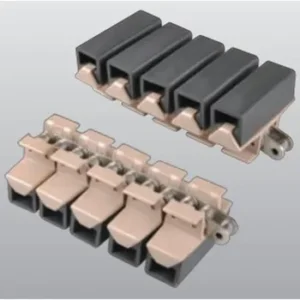
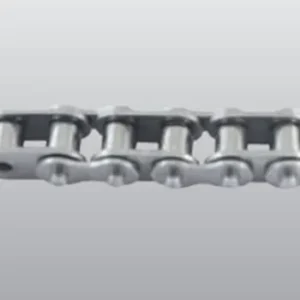
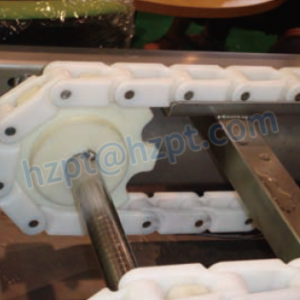
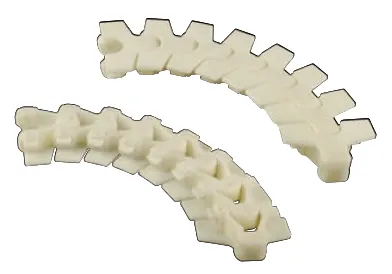
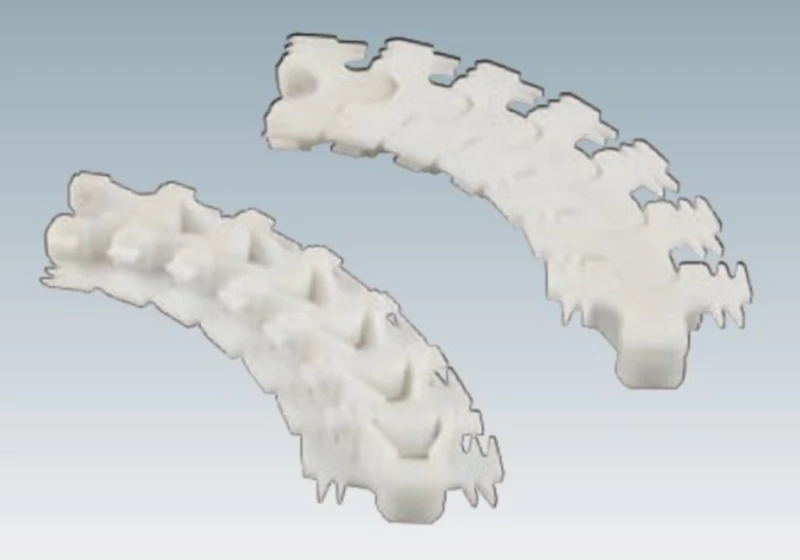
Snap-on flexible chains combine the lateral flexibility of a sideflexing chain with a surface geometry that allows containers, bottles, and cartons to transfer smoothly between conveyor sections without tipping or jamming. The 83A, 83B, 83C, 103A, 140A3, 140A4, and 146A series cover the most common configurations across food processing, beverage filling, logistics sorting, and light industrial assembly. Each model uses a snap-on top plate that attaches to a standard plastic flexible chain body, allowing top-surface replacement without replacing the entire chain assembly.
EverPower plastic chain Australia Pty Ltd supplies these as direct-fit replacements for System Plast equivalent models. All variants are manufactured from engineering-grade POM (polyoxymethylene) for the chain body and POM or PA66 for top plates, delivering the corrosion resistance and low-friction properties required in wet-zone and food-contact environments.
Series Breakdown and Model Differences
Each series designation reflects the chain body width and the top plate finger geometry, which directly determines the smoothness of product transfer at conveyor gaps and transitions.
| Series | Type | Top Plate | Width (nominal) | Primary Application |
|---|---|---|---|---|
| 83A | Plain Chains (Fingered) | Fingered POM | 83 mm | Smooth dead-plate transfers, bottle neck handling |
| 83B | Plain Chains | Flat POM | 83 mm | General accumulation, carton and can conveying |
| 83C | Flexible Cleated | Cleat POM | 83 mm | Inclined conveying, product separation |
| 103A | Plain Chains (Fingered) | Fingered POM | 103 mm | Wider-neck bottles, cartons, retail packaging |
| 140A3 | Plain Chains (3-Finger) | 3-Finger POM | 140 mm | Heavy containers, wide transfer gaps |
| 140A4 | Plain Chains (4-Finger) | 4-Finger POM | 140 mm | Maximum transfer stability, large container bases |
| 146A | Plain Chains | Flat POM | 146 mm | Wide-format accumulation, tray conveying |
Why Fingered Top Plates Matter at Conveyor Transfers
The fingered top plate geometry on the 83A and 103A series eliminates the container-tip problem at dead-plate transfers — where product moves from a moving chain onto a stationary plate or onto another chain at a different speed. Without fingers, the gap between the chain leading edge and the static plate creates a step that catches lightweight container bases. The interlocking finger geometry bridges this gap continuously as the chain advances, maintaining uninterrupted base support throughout the transfer.
At a conveyor running 40 m/min, the transfer gap exposure time for a 30 mm container base is approximately 45 milliseconds. Without fingers, that 45 ms window creates a 12–18% tip probability for containers with a base-to-height ratio below 0.4 — a common profile for 500 ml PET water bottles. Fingered chain reduces that probability to under 2%. On a facility producing 50,000 units per hour, a single tip event costs approximately 600 units when accounting for rejects, rework, and line reset time.
Material Properties and Operating Limits
All chain body components are manufactured from POM-C (copolymer acetal): low coefficient of friction (0.20–0.35 against stainless steel in dry conditions), high surface hardness (Rockwell M78–M90), and chemical resistance to dilute acids, alkalis, and alcohols typical of food and beverage CIP programmes. POM-C is dimensionally stable from −40 °C to +90 °C continuous, with short-term tolerance to +120 °C — adequate for pasteuriser pre-zones.
Installation, Tensioning, and Replacement
The snap-on top plate design means individual plates can be replaced without removing the chain from the conveyor frame — valuable on multi-strand accumulation tables where full chain removal requires complete product evacuation of a conveyor section. Worn plates show visible cracking at the hinge root, surface wear exceeding 0.8 mm depth, or increased chain-to-guide rail friction measurable as higher motor current draw.
Chain tensioning follows standard plastic chain practice: sag of 1–2% of centre-to-centre drive distance on the slack-strand side. Over-tensioning POM chains causes premature link fatigue at the hinge pin bore, typically presenting as elongated wear holes rather than pin shear. At the first sign of bore elongation exceeding 0.5 mm from nominal pin diameter, schedule full chain replacement within the next maintenance window.
Compatible Components Also Supplied by EverPower
| Component | Description | Availability |
|---|---|---|
| Sprockets & Idler Wheels | Matched to each series body width and pitch | ✓ In stock |
| Replacement Top Plates | All finger types, natural and black POM | ✓ In stock |
| Aluminium Beam Guide Rails | Extruded profiles, cut to length | ✓ On request |
| Connecting Links & Hinge Pins | SUS304 and carbon steel options | ✓ In stock |
What Our Customers Say
“We replaced a System Plast 83B accumulation table chain with the EverPower equivalent. Fitment was perfect — same pitch, same sprocket interface. No adjustment required. The POM material runs quieter than the previous chain, which matters on our open-plan warehouse floor.”
— Plant Engineer, Logistics Distribution Centre, Sydney NSW
“The 83A fingered chain eliminated the tip problem at our labelling dead plate. We went from roughly 3–4 tip events per shift to zero over the following month. That is a productivity gain we could put a real number on.”
— Line Supervisor, Bottled Water Producer, Adelaide SA
“103A fingered chains on our wide-format juice line. We ordered based on the EverPower technical data sheet and the chain ran first time, correct tension, no shimming. Technical questions answered by email within two hours.”
— Maintenance Supervisor, Juice Processing Facility, Brisbane QLD