Description
Product Overview
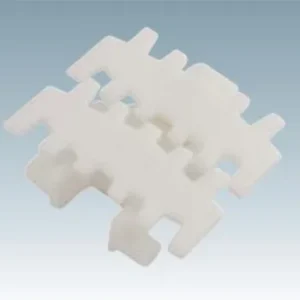
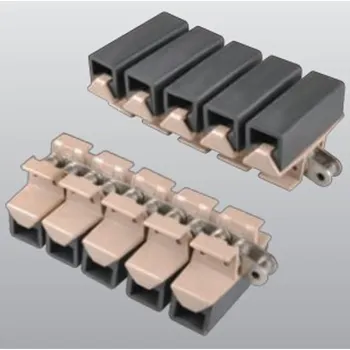
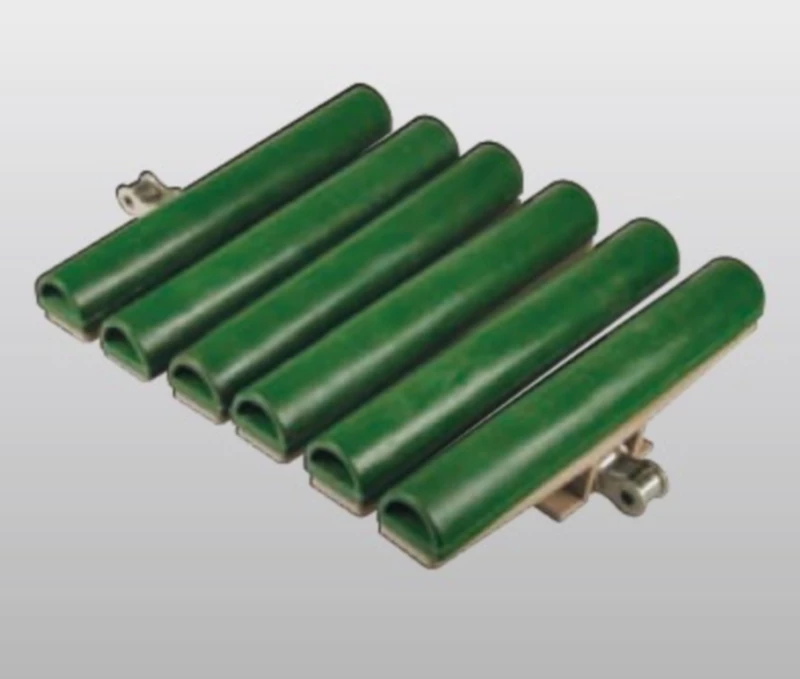
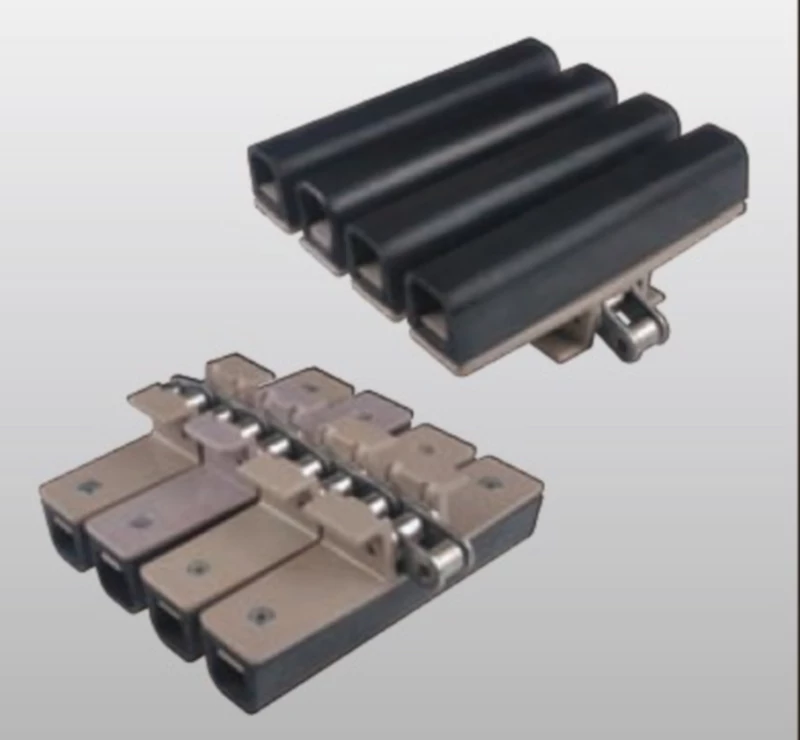
Plastic conveyor chains with snap-on grippers solve one of the most persistent challenges on beverage and food packaging lines: handling bottles, vials, and containers through vertical lifts and curved sections without damaging surfaces or causing line stoppages. The 1873-series chain combines a precision steel base roller chain with clip-in plastic gripper inserts that require no tools for replacement — a practical advantage on facilities running two or three shifts a day. Whether the application is a vertical spiral elevator, a neck-ring clip-bottle conveyor, or a sideflexing accumulation zone, this chain family covers the full range with nine distinct gripper configurations.
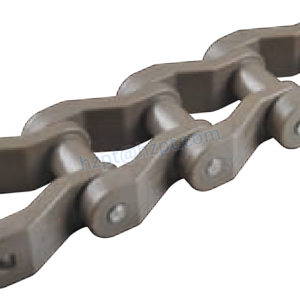
EverPower plastic chain Australia Pty Ltd supplies the complete 1873 gripper chain range from its Sydney NSW warehouse. The base roller chain is available in SUS304 stainless steel or carbon steel. Maximum continuous run is 24 metres; maximum lubricated speed is 90 m/min and dry-run rated at 60 m/min. Standard packing: 10 ft (3.048 m) per box, 26 links per metre.
Full Model Specifications — 1873 Series
Nine gripper variants cover the full range of bottle geometries, material requirements, and operating environments. All models share the same base chain pitch and sprocket interface, simplifying mixed-variant installations on the same line.
| Model | Gripper Type | Base Material | Max Speed (lub.) | Max Speed (dry) | Max Run |
|---|---|---|---|---|---|
| 1873GD | Standard Sideflexing | SUS304 / Carbon Steel | 90 m/min | 60 m/min | 24 m |
| 1873GJ3A | Sideflexing Type 3A | SUS304 / Carbon Steel | 90 m/min | 60 m/min | 24 m |
| 1873GJ3B | Sideflexing Type 3B | SUS304 / Carbon Steel | 90 m/min | 60 m/min | 24 m |
| 1873GJ4 | Sideflexing Type 4 | SUS304 / Carbon Steel | 90 m/min | 60 m/min | 24 m |
| 1873G4 | Sideflexing G4 | SUS304 / Carbon Steel | 90 m/min | 60 m/min | 24 m |
| 1873G4M | Sideflexing G4M | SUS304 / Carbon Steel | 90 m/min | 60 m/min | 24 m |
| 1873D1 | NBR Rubber Gripper | SUS304 / Carbon Steel | 90 m/min | 60 m/min | 24 m |
| 1873D2 | Natural Rubber Gripper | SUS304 / Carbon Steel | 90 m/min | 60 m/min | 24 m |
| 1873D3 | Silica Gel (Food-Grade) | SUS304 / Carbon Steel | 90 m/min | 60 m/min | 24 m |
Gripper Material Selection Guide
Choosing the wrong gripper compound is the most common cause of clip-bottle conveyor failure. Under-grip causes containers to slip on incline sections; over-grip marks thin-walled packaging. The three D-series elastomers address this precisely.
1873D1 — NBR (Nitrile Butadiene Rubber)
The workhorse for wet-zone beverage lines. NBR resists oils and mild acids (pH 4–9) from −30 °C to +100 °C, covering pasteuriser entry and exit zones. Hardness 55–65 Shore A. Non-marking on glass and PET. The most widely deployed variant in Australian bottling facilities.
1873D2 — Natural Rubber
Higher tensile strength, softer contact than synthetic compounds. Preferred for lightweight, thin-walled containers — cosmetic packaging, pharmaceutical vials — where surface contact pressure must stay below approximately 0.3 N/mm² to avoid distortion. Not suitable for oil-present zones.
1873D3 — Silica Gel (Food-Grade FDA)
Meets FDA 21 CFR §177.2600 and EU 10/2011. Stable from −60 °C to +230 °C, compatible with CIP steam cycles and UV sterilisation tunnels. Higher per-metre cost than NBR, but typically the most economical choice over a 3-year horizon in dairy and ready-meal production due to extended service life under thermal-shock conditions.
Sideflexing Capability and Layout Design
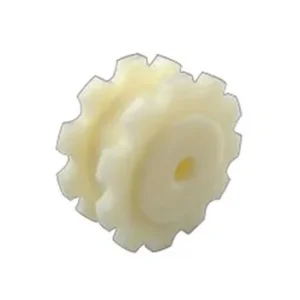
Every 1873-series model is a sideflexing plastic chain, meaning horizontal curves are handled without separate curve units — removing approximately 40–60% of the hardware cost at each conveyor corner. At 60 m/min, most 1873-series variants accept a minimum inner bend radius of roughly 400 mm; at 30 m/min, compact spiral-tower configurations can achieve approximately 250 mm inner radius. Matched sprockets in 40, 50, and 60-tooth are available from EverPower in SUS304 and engineering-plastic grades.
Clip-Bottle Transport: Mechanics and Maintenance Reality
In a high-speed clip-bottle line running 60,000 bottles per hour, each conveyor position completes roughly 35–40 engagement cycles per minute. Over an 8,000-hour annual cycle, that accumulates to approximately 17–19 million engagement events per gripper insert. Replacement intervals for POM-body inserts in dry environments fall within 12–18 months; NBR inserts in wet zones require replacement at 8–12 months. The snap-on fitment design turns each replacement into a 2-minute micro-stoppage task, aligned with TPM principles widely adopted in Australian food manufacturing.
Three signals indicate a worn insert: visible crack propagation at the clip root; measurable reduction in gripper contact width of more than 1 mm from nominal; or container misalignment events occurring more than twice per shift. Any one warrants replacement within the next planned micro-stoppage — not deferred to the next major shutdown.
Food Safety and Wash-Down Compliance
Australian food manufacturing operates under FSANZ Food Safety Standard 3.2.3 and Safe Food Australia guidelines. The 1873-series meets these requirements through the food-contact compliance of the gripper compound and an open-link base structure that permits full wash-down penetration. Alkaline foam cleaners at up to 85 °C reach every internal surface without dismantling. Learn more about our compliance approach on the About Us page.
Matched Components Also Supplied by EverPower
| Component | Description | Availability |
|---|---|---|
| Plastic Sprockets (40T/50T/60T) | PA66 or SUS304, matched to 1873 pitch | ✓ In stock |
| Replacement Gripper Inserts | NBR / Natural Rubber / Silica Gel, individual or bulk | ✓ In stock |
| Aluminium Guide Rails (Beams) | Extruded profiles for chain support | ✓ On request |
| Base Roller Chains | SUS304 and carbon steel, 19.05 mm pitch | ✓ In stock |
What Our Customers Say
“We switched to the 1873D1 NBR variant across our CSD filling line 18 months ago. Gripper insert replacements dropped from a half-day scheduled task to a 10-minute walk-around. The stainless base chain has held up perfectly through daily CIP cycles.”
— Production Manager, Beverage Facility, Western Sydney NSW
“The silica gel D3 inserts are the only gripper we have found that genuinely handles our hot-fill PET line without marking the label zone. FDA compliance documentation arrived same day as the technical data sheet.”
— Maintenance Engineer, Ready Meal Producer, Melbourne VIC
“Ordering was straightforward — we sent the worn chain as a reference sample, and EverPower matched the gripper profile and base pitch within 24 hours. Delivery to Brisbane in four working days. Exactly what you need for an urgent replacement.”
— Engineering Buyer, Contract Packaging Company, Brisbane QLD