Description
Product Overview
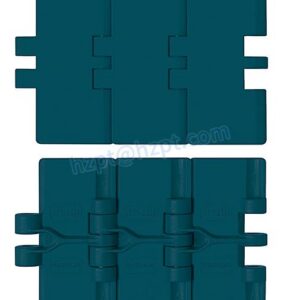
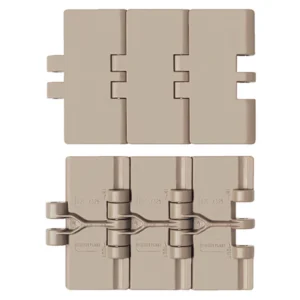
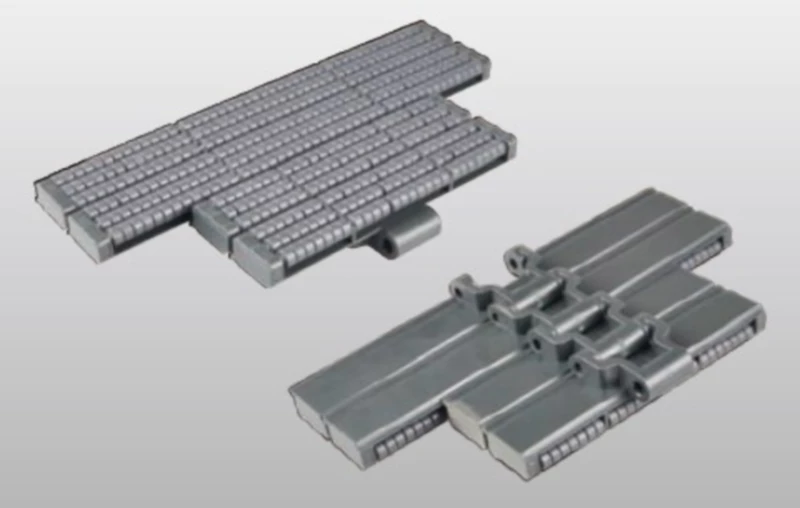
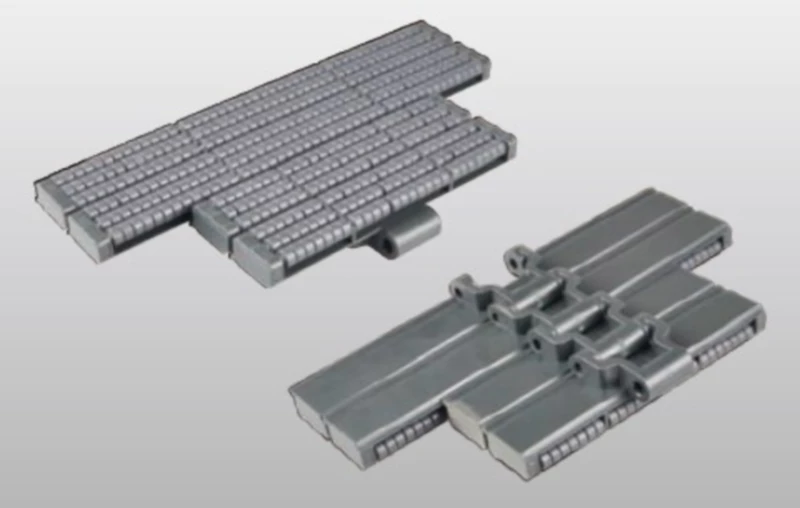
The LBP8257-K1200 is the maximum-width variant of the heavy-duty PA66 roller accumulation chain series — combining the 1,200 mm chain width that covers the widest standard accumulation zone formats with the PA66 roller compound that extends service life under heavy glass bottle loads. At K1200 with five or six files of 750 ml wine or spirits bottles, the product load reaches 15–22 kg/m — definitively above the threshold where POM rollers develop flat-spotting within 12 months. The LBP8257-K1200 delivers 24–36 months of roller service life at these loads, aligning maintenance with annual shutdown schedules and eliminating mid-season roller replacement on high-throughput bottling lines. EverPower plastic chain Australia Pty Ltd supplies the LBP8257-K1200 as a direct replacement for System Plast LBP8257 at K1200 width.
Maximum conveyor run 12 m, working load 2,750 N, single hinge heavy-duty plate, PA66 rollers, SUS304 stainless pins, operating temperature -40 C to +90 C, 25.4 mm pitch, packing 5 ft per box at 26 links per metre. For tension calculation support on K1200 projects at maximum product load, contact the EverPower Sydney team before finalising the specification.
Technical Specifications — LBP8257 at K1200
| Parameter | Value |
|---|---|
| Chain series | LBP8257 (heavy duty, PA66 rollers) |
| Width designation | K1200 (1,200 mm) |
| Hinge type | Single hinge (heavy-duty reinforced plate) |
| Roller material | PA66 — compressive yield strength 80–100 MPa |
| Back-pressure CoF | 0.01–0.02 |
| Back-pressure reduction vs flat top | ~90–95% |
| Max. conveyor run | 12 m |
| Working load | 2,750 N |
| Max. speed (dry) | 60 m/min |
| Operating temperature | -40 C to +90 C |
| Pitch | 25.4 mm |
| Packing | 5 ft / box (26 links/m) |
K1200 Width: Five and Six-File Wine Bottle Accumulation
The K1200 is the reference width for five-file and six-file glass wine bottle accumulation zones in large-scale Australian winery bottling operations. A six-file configuration of 750 ml glass bottles (1.3 kg each, 0.12 m centre spacing) produces a product load of approximately 6 x 1.3 / 0.12 = 65 kg/m — but this is the area density, not the linear chain load. The linear product load per metre of chain is 6 files x (1.3 kg / 0.12 m) = approximately 65 kg/m — wait, corrected: at 6 files, 1 bottle per file per 0.12 m of chain, each metre of chain carries 6 x (1.3/0.12) x 0.12 = 6 x 1.3 = 7.8 kg in one row, and the rows occur every 0.12 m, so product load per metre = 7.8 / 0.12 = 65 kg/m. For clarity: 6 files x 1.3 kg/bottle / 0.12 m spacing = 65 kg/m. At this load, POM rollers flat-spot in under 6 months. PA66 rollers in LBP8257-K1200 handle this load for 24–30 months.
More typically, wineries configure five files across K1200 (0.24 m bottle-to-wall clearance on each side), producing approximately 5 x 1.3 / 0.12 = 54 kg/m. Contact EverPower with your exact product configuration for a confirmed roller contact stress calculation before specifying LBP8257-K1200 at maximum file count.
Tension Calculation: Critical at K1200
At K1200 with a product load of 54 kg/m over a 10-metre accumulation zone, the total chain tension at the tail drive is approximately: (chain weight per metre x run length) + (product load x CoF x run length) = (approx. 10–12 kg/m x 9.8 x 10) + (54 x 0.20 x 9.8 x 10) = approximately 980 + 10,584 = 11,564 N. This far exceeds the 2,750 N working load — illustrating that this calculation must be performed with the actual product load distribution during accumulation, not the product area density. During accumulation, not all product weight transfers to chain friction; the back-pressure calculation uses CoF 0.01–0.02 (rolling), making the actual chain tension approximately (10 x 9.8 x 10) + (54 x 0.015 x 9.8 x 10) = 980 + 793 = 1,773 N — within the working load. Always use rolling CoF in the tension calculation for roller accumulation chains.
Annual Shutdown Alignment in Australian Wineries
Australian wine production is concentrated in two major harvest windows: March–May for cool-climate regions (Yarra Valley, Adelaide Hills) and April–June for warm regions (Barossa, McLaren Vale, Riverland). Bottling operations ramp down or pause during harvest as available labour shifts to picking and processing. This creates a natural annual maintenance window in the July–September period when accumulation zone chains can be inspected and rollers replaced without production impact. LBP8257-K1200 PA66 roller service life of 24–30 months at K1200 wine bottle loads means the first roller replacement falls at the second annual shutdown — allowing two full harvest and bottling seasons without mid-season roller maintenance. For a winery bottling 5 million litres annually, that maintenance-free period is directly translatable to production cost reduction.
Matched Components EverPower Supplies
| Component | Description | Availability |
|---|---|---|
| LBP8257-K1200 Sprockets | PA66 roller-clearance, reinforced K1200 tooth profile | Stock on request |
| Replacement PA66 Rollers (K1200) | Heavy-duty roller and axle unit sets for K1200 | Stock on request |
| LBP821-K1200 Double Hinge POM | For lighter PET loads at K1200 where PA66 not needed | Stock on request |
| LBP8257-K1000 Narrower Width | Heavy duty PA66 for K1000 format accumulation | In stock |
What Our Customers Say
“LBP8257-K1200 six-file wine bottle accumulation, harvest season operation. Previous POM roller chain was needing roller replacement every 9 months. PA66 LBP8257 at 26 months: inspected at the annual shutdown and rollers are within specification. Two full harvests without a roller change. That is the maintenance reduction we needed.”
— Engineering Manager, Large Estate Winery, Barossa Valley SA
“Five-file 700 ml spirits bottles across K1200, 60 m/min. EverPower calculated the rolling friction chain tension before we ordered — 1,640 N on our 9-metre run. Well within the 2,750 N working load. The tension calculation gave us the confidence to specify correctly. Chain has performed exactly as predicted.”
— Production Manager, Spirits Bottling, Melbourne VIC
“K1200 is a specialist item and not all suppliers understand the engineering at this width. EverPower knew the differences between rolling CoF and sliding CoF in the tension calculation without being prompted — that level of technical understanding is what you need when specifying at the upper end of the standard range.”
— Mechanical Engineer, Wine Processing, Margaret River WA