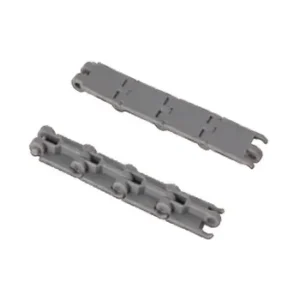
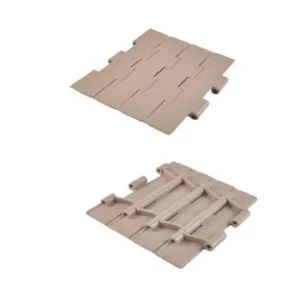
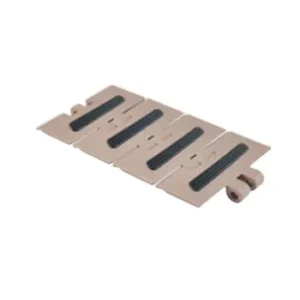
Description
Product Overview
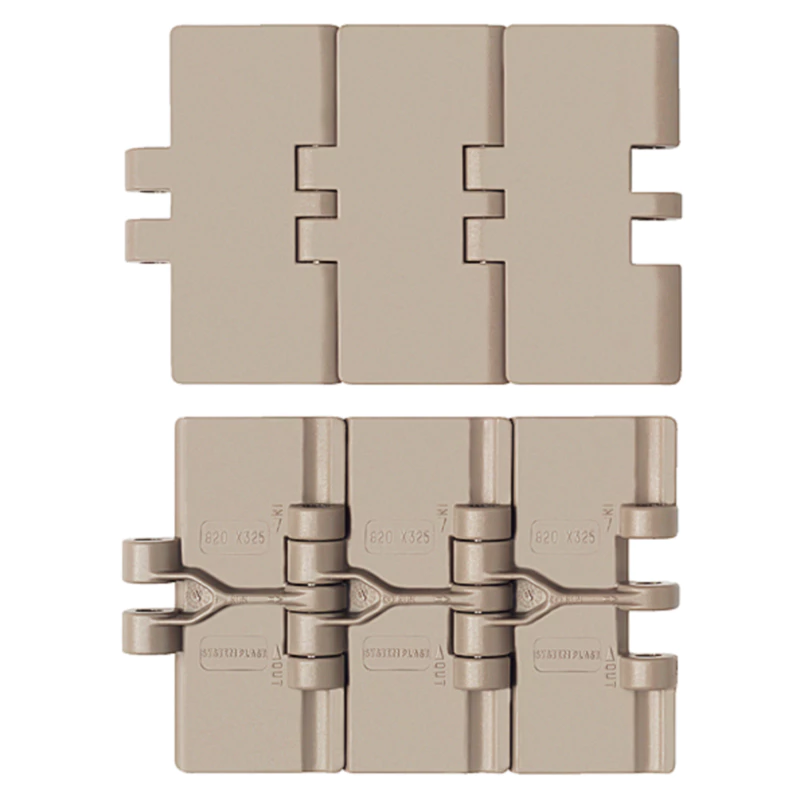
The LF831 is a single hinge straight running flat top chain with a wider link plate than the LF820, providing a larger top surface area per link and a marginally higher allowable working load at equivalent chain widths. While the LF820 is the most widely deployed chain in the System Plast flat top range, the LF831 is specified where the additional top plate width improves product stability — particularly for containers with base diameters that span close to the link plate edge on the LF820, or for applications where the extra surface contact area reduces the localised contact stress on delicate product bases. EverPower plastic chain Australia Pty Ltd supplies the LF831 series as a direct replacement for System Plast 831, across widths from K118 to K600, with full dimensional compatibility with existing System Plast 831 sprockets and guide rail frames.
The LF831 and LF820 share the same 25.4 mm pitch, the same hinge pin material and diameter, and the same sprocket engagement geometry. The practical difference at the conveyor system level is the link plate width and the slightly different guide rail contact profile. On existing System Plast 831 installations, EverPower LF831 replaces directly. On new installations where either chain could be specified, the LF820 is the more economical choice for standard applications; the LF831 is the correct choice where the wider plate provides a measurable product stability advantage. See the full EverPower product range for more.
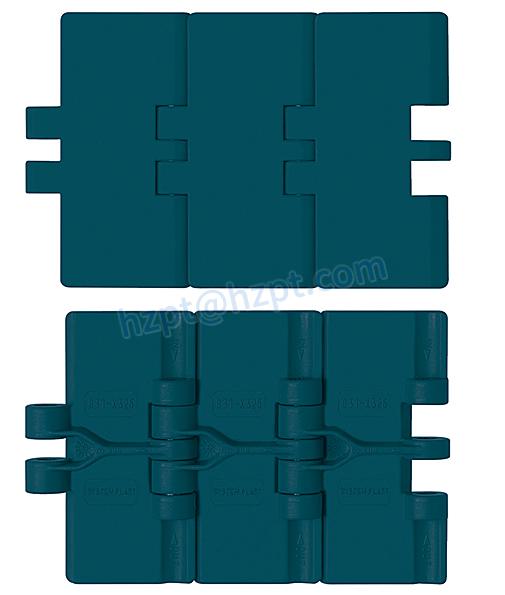
LF831 Width Range and Specifications
| Width Designation | Top Plate Width (mm) | Pitch | Hinge Type | Max Speed (dry) | Packing |
|---|---|---|---|---|---|
| K118 | 118 | 25.4 mm | Single | 60 m/min | 10 ft / box |
| K190 | 190 | 25.4 mm | Single | 60 m/min | 10 ft / box |
| K252 | 252 | 25.4 mm | Single | 60 m/min | 10 ft / box |
| K325 | 325 | 25.4 mm | Single | 60 m/min | 10 ft / box |
| K450 | 450 | 25.4 mm | Single | 60 m/min | 10 ft / box |
| K600 | 600 | 25.4 mm | Single | 60 m/min | 10 ft / box |
LF831 vs LF820: When the Difference Matters
The practical distinction between the LF831 and LF820 is the link plate width, which is slightly larger on the LF831. This additional width provides marginally more product support surface per link — an advantage that becomes meaningful in three specific scenarios.
First, for containers whose base diameter is at the upper limit of what the LF820 plate supports without the container partially spanning the gap between adjacent link plates. At 25.4 mm pitch, two adjacent LF820 link plates have a combined contact surface of approximately 20–22 mm in the direction of travel. A container with a base diameter of 22–28 mm partially bridges the inter-link gap, experiencing a subtle periodic variation in vertical support as successive links engage and disengage. The LF831’s wider plate reduces this effect by increasing the contact surface length per link.
Second, on lightly loaded conveyors where product contact pressure must be minimised — sensitive fresh produce, fragile ceramic tiles, soft cosmetic packaging — the larger LF831 plate area distributes product weight across more surface, reducing peak contact stress at the product base. For products where even the standard LF820 POM hardness leaves surface impressions, the LF831 combined with a soft UHMWPE wear strip insert (which raises the chain slightly, changing the contact geometry) can solve the marking problem without specifying a rubber-top chain.
Third, for food processing lines where maximum sanitary surface area is required for visual inspection — the wider LF831 plate presents more visible chain surface per unit of conveyor length, making it easier for hygiene staff to confirm cleanliness between production runs.
Cleaning, Inspection, and HACCP Compliance
Both LF831 and LF820 are manufactured from natural white POM-C as standard. The white surface enables visual inspection of the chain top plate for product residue, biological material, and physical contamination during production and at shift change. This visual inspectability is a documented compliance advantage under FSANZ Food Safety Standard 3.2.3, which requires that food contact surfaces be inspectable and cleanable. The flat, continuous-surface LF831 — with no slots, grooves, or textural features that could trap debris — is among the easiest conveyor surfaces to confirm clean through visual inspection.
Alkaline foam cleaning at 1–3% NaOH concentration and up to 85 °C is compatible with the LF831 POM-C chain body. Pressure rinsing at up to 80 bar is acceptable; directed high-pressure nozzles should avoid sustained contact at close range as the spray force can displace chain links laterally if aimed between links at the hinge gap. Standard wash-down practice — sweeping the spray nozzle across the chain surface rather than directing it between links — provides full cleaning without risk of chain displacement.
Matched Components EverPower Also Supplies
| Component | Description | Availability |
|---|---|---|
| LF831 Sprockets — all widths | POM and SUS304, matched to 831 tooth profile | ✓ On request |
| LF831 Connecting Pins | SUS304 stainless, all K-widths | ✓ In stock |
| LF820 Standard Flat Top | For applications where 831 width advantage is not required | ✓ In stock |
| LF820G / LF821G Rubber Top | Grip surface variants for inclined sections | ✓ In stock |
What Our Customers Say
“LF831 K325 on our fresh herb conveyor. The wider plate compared to LF820 reduced the number of stems falling between link gaps — an ongoing issue we had on the previous chain. Simple improvement, significant reduction in product loss and cleaning time at the gap zones.”
— Production Manager, Fresh Produce Processing, Queensland
“We run LF831 K450 for our cosmetic tray conveying. The larger contact surface reduces the impression marks on soft-base trays that we were seeing with LF820. No marking issues in six months since the switch. We checked hinge bore wear at the first quarterly inspection and it is within spec.”
— Engineering Technician, Cosmetics Manufacturing, Sydney NSW
“LF831 on our visual inspection conveyor for the food safety audit trail — the wider white surface is easy to photograph and document as clean. Our auditor noted the inspectability improvement explicitly in the audit report. The hygiene documentation value alone justified the specification change.”
— Quality Assurance Manager, Food Manufacturing, Melbourne VIC