Description
Product Overview
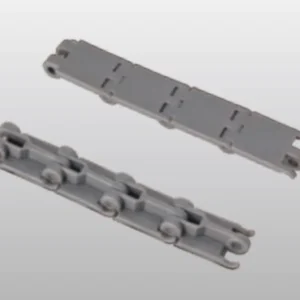
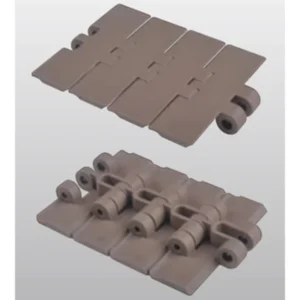
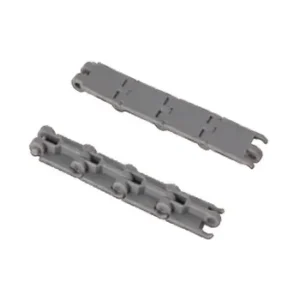
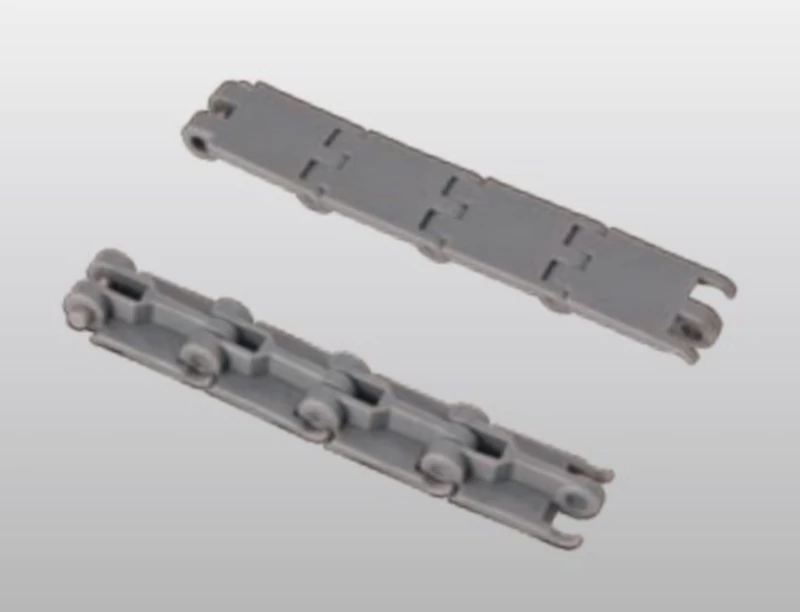
The LF820 single hinge mini straight flat top chain is a specific configuration within the LF820 mini series: a single hinge pin design optimised for straight-run conveying of small products at narrow-to-medium chain widths. Where the standard LF820 mini range covers the broadest application set, this single hinge mini straight configuration is specified when engineers require a confirmed single-pin hinge geometry — rather than the reinforced or cross-pin variants used in some mini flat top designs — for applications where the maintenance team needs to use the same pin-extraction tool set across both standard and mini chain sections on the same line. EverPower plastic chain Australia Pty Ltd supplies this configuration as a direct replacement for System Plast 820 mini single hinge straight, covering widths from K118 to K450.
The key parameters define the operational envelope clearly: maximum conveyor length 12 metres, maximum tensile strength 1,230 N, maximum dry-run speed 60 m/min, operating temperature −40 °C to +90 °C. These are the same parameters as the broader LF820 mini family — what distinguishes this specific product is the confirmed single hinge pin construction, the straight-run geometry (no TAB links for sideflexing), and the dimensional precision that ensures first-fit compatibility with System Plast 820 mini single hinge sprockets.
Why Single Hinge Matters for Mini Flat Top
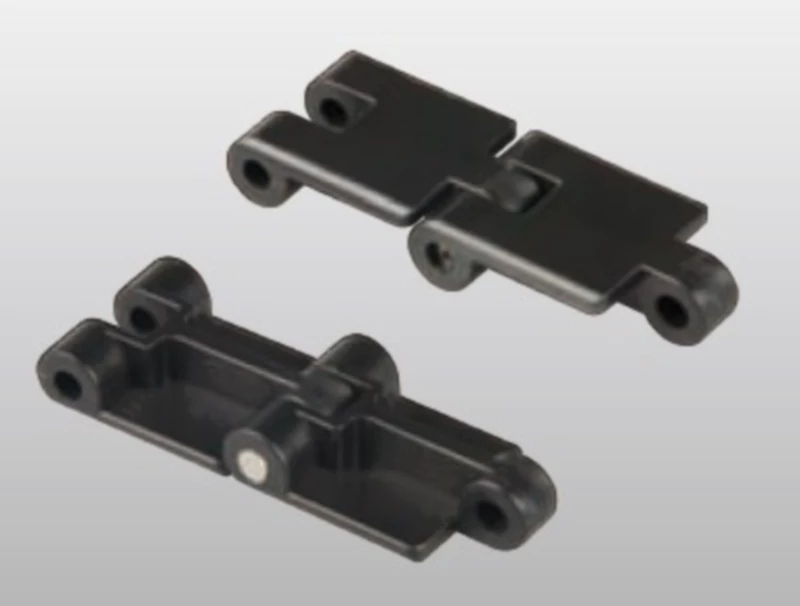
Mini flat top chains exist in single-hinge and reinforced-hinge variants, and the distinction matters more than it might initially appear. A single hinge pin design uses one pin across the full chain width at each link joint. At the narrow widths typical of mini flat top chains (K118 to K450), the pin span is short enough that a single pin provides adequate bending resistance without the deflection under load that makes single-hinge designs impractical at wider chain widths. The single pin also simplifies maintenance: pin extraction and reinsertion requires one tool motion rather than the coordinated dual-pin operation of a double-hinge mini design.
On pharmaceutical and cosmetic product lines where the conveyor maintenance technician may be performing chain adjustments under time pressure during a shift-change stoppage, the single-hinge mini design’s simpler maintenance procedure is a real operational advantage. The reduced complexity also reduces the risk of an incorrectly reinserted pin — a failure mode that creates a chain-break event at the next high-tension point, typically the drive sprocket entry zone.
Width Range, Load Data, and Packing
| Width | Max. Tensile | Max. Run | Packing | Links per Metre | Max Speed |
|---|---|---|---|---|---|
| K118 | ≤1,230 N | ≤12 m | 10 ft / box | ~65 | 60 m/min |
| K190 | ≤1,230 N | ≤12 m | 10 ft / box | ~65 | 60 m/min |
| K252 | ≤1,230 N | ≤12 m | 10 ft / box | ~65 | 60 m/min |
| K325 | ≤1,230 N | ≤12 m | 10 ft / box | ~65 | 60 m/min |
| K450 | ≤1,230 N | ≤12 m | 10 ft / box | ~65 | 60 m/min |
Application Fit: Straight-Run Small Product Lines
The straight-run constraint of this configuration means it is specified for linear conveyor sections — no horizontal curves. For small-product lines that are entirely linear (pharmaceutical blister inspection lines, cosmetic tube transport on single-axis conveyors, miniature bottle transport between filling and capping on a straight-line machine), the single hinge mini straight is the correct and most cost-effective specification. For lines that include horizontal curves, the LF820 mini TAB sideflexing variant is required at the curve sections, and the single hinge mini straight covers the straight sections of the same system.
Food and soft drink vial lines represent the most common application context in the Australian market. A standard filling line for 10–30 ml glass or POM vials will run the mini straight chain at 35–50 m/min. At this speed range, the reduced pitch mini chain keeps the polygon effect excitation frequency above the primary resonance modes of the vials, producing a stable, tip-free transport without speed reduction. The alternative — running standard pitch LF820 chain at reduced speed to achieve stability — costs throughput. The mini chain recovers that throughput at the same stability level.
Cleaning Protocol for Mini Flat Top in Food-Grade Applications
The increased number of hinge points per metre on a mini flat top chain — approximately 65 versus 39 for a standard LF820 — creates proportionally more hinge-gap zones where product residue can accumulate. For food processing applications, this means the cleaning programme must be designed around the mini chain’s higher hinge density. Alkaline foam cleaning at 1–3% NaOH, applied with a brush or low-pressure spray to ensure foam penetration into each hinge gap, followed by a minimum 5-minute contact time before rinsing, achieves the surface cleanliness required under FSANZ Standard 3.2.3.
For applications where CIP spray nozzles are the primary cleaning mechanism, ensure the nozzle pattern covers the full chain width at the hinge gap level — not only the flat top surface. Food safety auditors inspecting mini flat top chains should focus their surface inspection on the hinge gap zones, which present the highest contamination retention risk and are the appropriate test points for ATP bioluminescence swabbing during verification cleaning.
Matched Components EverPower Supplies
| Component | Description | Availability |
|---|---|---|
| LF820 Mini Single Hinge Sprockets | Matched tooth profile, all K-widths K118–K450 | ✓ On request |
| Mini Single Hinge Connecting Pins | SUS304, individual and bulk | ✓ In stock |
| LF820 Standard Flat Top | For longer sections on the same line where load allows | ✓ In stock |
| LF820 Mini TAB Sideflexing | For curved sections on the same mini-chain system | ✓ On request |
What Our Customers Say
“Single hinge mini straight K252 on our 15 ml vial inspection conveyor. The single-pin design was important to our maintenance team — they use the same pin punch for both this and the adjacent standard LF820 chain. No retooling at chain maintenance. A practical choice as well as a technical one.”
— Maintenance Coordinator, Pharmaceutical Manufacturer, Sydney NSW
“Mini straight K325 on our cosmetic serum tube line at 48 m/min. We had tried the standard LF820 first — tip rate was too high at target speed. Mini straight at 48 m/min: zero tips in the first month. We have not had a single line stoppage attributable to tube tip in six months since installation.”
— Production Engineer, Cosmetics Manufacturing, Melbourne VIC
“The cleaning protocol recommendation from EverPower’s technical team was exactly what our food safety auditor wanted to see documented. Specifying contact time at each hinge gap zone is the right level of detail for a HACCP cleaning plan on mini flat top chain. We used that guidance verbatim in our cleaning SOP.”
— Quality Manager, Nutraceutical Production, Brisbane QLD