Description
Product Overview
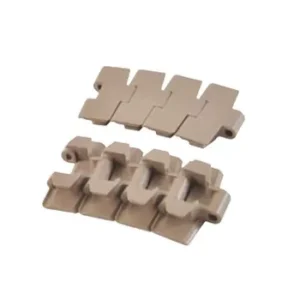
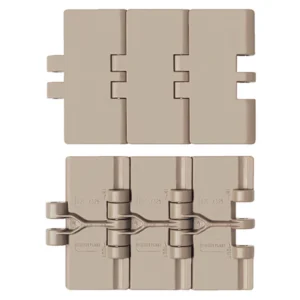
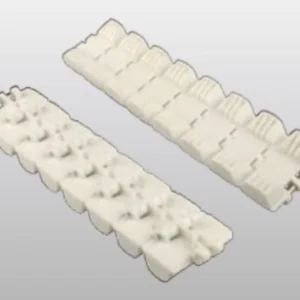
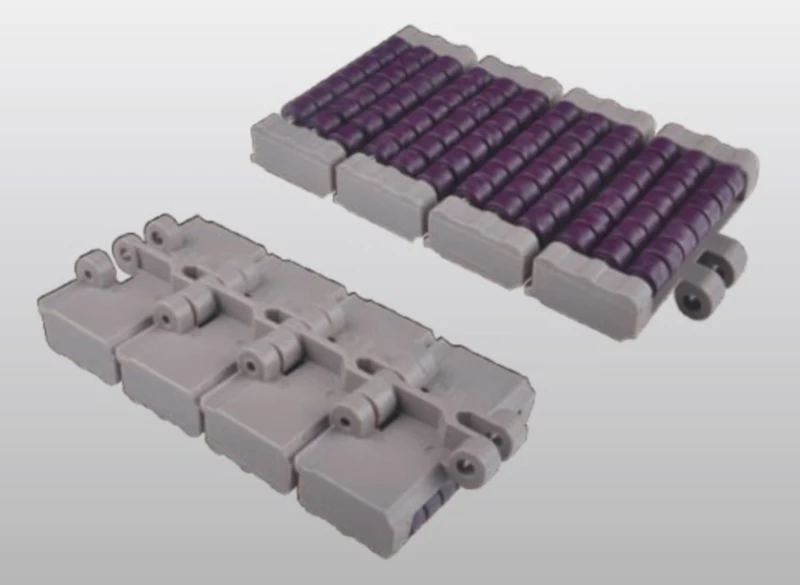
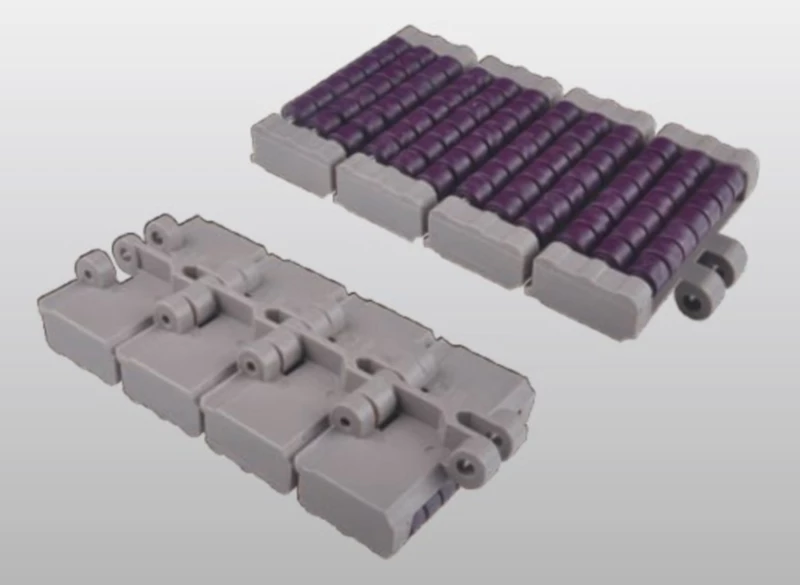
The LBP831-K450 is the 450 mm width variant of the LBP831 single hinge low-noise accumulation roller chain — the most widely used roller accumulation chain width in Australian single-file beverage and food production. At K450, the chain handles the broadest range of standard packaging formats: 250 ml to 2 litre PET bottles in single file, 330 ml to 500 ml aluminium cans, and standard juice and dairy carton formats. The wider 450 mm plate compared to the K325 variant provides more lateral stability for taller containers with a relatively narrow base — an advantage on accumulation zones where containers are more susceptible to tip when the accumulated column develops a lateral lean under the back-pressure force on the downstream stop. EverPower plastic chain Australia Pty Ltd supplies the LBP831-K450 as a direct replacement for System Plast LBP831 at K450 width.
Specifications: maximum conveyor run 12 m, working load 2,750 N, operating temperature -40 C to +90 C, 25.4 mm pitch, POM-C plate and roller material, SUS304 austenitic stainless steel pins, standard packing 10 ft per box at 26 links per metre. Learn more about EverPower at the About Us page.
Why K450 Is the Reference Width for Beverage Accumulation
K450 became the reference width for single-file beverage line accumulation because it accommodates the full range of standard bottle base diameters used in CSD, water, juice, and RTD beverage production — from the 57 mm base of a standard 330 ml PET bottle to the 90 mm base of a 2 litre family-size bottle. A K325 chain is too narrow for 2 litre formats (the bottle overhangs excessively); a K600 chain wastes conveyor width for single-file 250 ml formats. K450 is the single width that serves all these formats without adjustment, making it the rational choice for multi-format beverage filling lines where format change frequency makes per-format chain width optimisation impractical.
Single-file accumulation at K450 with the LBP831 roller chain is the standard configuration upstream of capping, labelling, and cartoning stations on Australian beverage lines. The accumulation zone holds product while the downstream station processes the previous batch; the roller chain allows the filling line to continue running at rated speed without pushing the accumulated column hard enough to deform bottles at the front of the queue. At 60 m/min with a 5-metre accumulation zone and a product load of 6 kg/m (typical for 500 ml PET water), the LBP831-K450 roller chain generates approximately 3–6 N of back-pressure force — below the 10–12 N threshold for base deformation on standard-wall 500 ml PET.
Technical Specifications — LBP831 at K450
| Parameter | Value |
|---|---|
| Chain series | LBP831 (single hinge, 831 wide-plate body) |
| Width designation | K450 (450 mm) |
| Hinge type | Single, SUS304 double-pin design |
| Roller material | POM low-noise roller on POM axle boss |
| Back-pressure CoF | 0.01–0.02 |
| Back-pressure reduction vs flat top | ~90–95% |
| Max. conveyor run | 12 m |
| Working load | 2,750 N |
| Max. speed (dry) | 60 m/min |
| Operating temperature | -40 C to +90 C |
| Pitch | 25.4 mm |
| Links per metre | 26 |
| Packing | 10 ft / box (26 links/m) |
K450 vs K325: Selecting the Correct Width
For installations where either K325 or K450 is geometrically feasible, the selection should be based on product format range and container stability characteristics rather than defaulting to the narrower width for cost reasons. At K450, the additional 125 mm of chain width reduces the lateral overhang of wide-base containers on the accumulation zone by approximately 60 mm on each side compared to K325 — a stability improvement that becomes significant on accumulation zones where containers must stay upright through direction changes at the conveyor ends and through the velocity variation at drive startup and shutdown.
Conversely, for lines conveying only small-diameter bottles (250–330 ml formats with base diameters below 65 mm), K325 is the more efficient specification: it uses less drive power (lower chain weight per metre), costs less per metre, and provides adequate lateral support for the product format. The K450 overhead is only justified when the product range includes base diameters approaching or above 80 mm, or when tall containers with high centre of gravity require the wider base support.
Accumulation Zone Design at K450: Practical Guidelines
A correctly designed LBP831-K450 accumulation zone considers three variables simultaneously: the required accumulation capacity (number of containers to buffer), the acceptable back-pressure force on the downstream stop, and the available conveyor length. For 500 ml PET bottles at K450 single-file: chain runs at 60 m/min with a 6 kg/m product load produce approximately 0.4–0.7 N per metre of accumulation zone length. A 5-metre zone produces 2–3.5 N total back-pressure — acceptable. A 12-metre zone (the maximum run) produces 5–8 N — still within the safe range for standard-wall PET. The 12-metre maximum run is the practical upper limit for single-section LBP831-K450 accumulation zones without tandem chain sections.
The most common installation error on K450 roller chain accumulation zones is specifying standard flat-top chain sprockets rather than roller-chain sprockets. The roller body projects above the chain plate surface — if a standard flat-top sprocket (designed for a chain with a flat top surface flush with the plate edge) is used, the roller bodies foul the sprocket tooth faces at the chain-sprocket engagement point, generating rapid roller damage and chain derailment. Always specify LBP831 roller-chain sprockets, which have a tooth profile recessed to clear the roller bodies.
Matched Components EverPower Supplies
| Component | Description | Availability |
|---|---|---|
| LBP831-K450 Sprockets | Roller-body-clearance tooth profile, matched to K450 | Stock on request |
| Replacement POM Rollers (K450) | Individual roller and axle units for LBP831-K450 | Stock on request |
| LBP831-K325 Narrow Width | For formats where K325 is the correct specification | In stock |
| Standard LF831-K450 Flat Top | For transport sections upstream of accumulation zone | In stock |
What Our Customers Say
“LBP831-K450 on our 500 ml water bottle filling line — 8-metre accumulation zone at 60 m/min. Before roller chain, we were running at 45 m/min to prevent base deformation in the accumulation column. After installation: full 60 m/min, zero base deformation in 7 months. The throughput recovery from 45 to 60 m/min on a 20,000 bph line is significant.”
— Production Manager, Bottled Water Facility, Sydney NSW
“K450 was the right width call for our multi-format juice line — we run 250 ml, 500 ml, 1 litre, and 2 litre formats on the same chain without adjustments. The 2-litre base at 90 mm diameter is well supported at K450; it would overhang too much on K325. Roller chain keeps back-pressure safe across all formats.”
— Line Engineer, Juice Production, Melbourne VIC
“We specified LBP831-K450 sprockets and the chain fitted correctly from day one. The previous supplier had quoted standard flat-top sprockets — good thing we checked. The roller clearance in the sprocket tooth profile is not an optional detail when ordering roller accumulation chain.”
— Maintenance Planner, Beverage Packaging, Brisbane QLD