Description
Product Overview
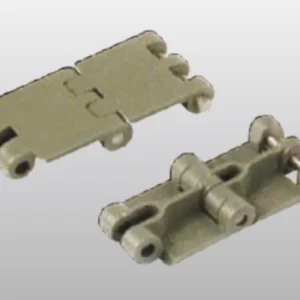
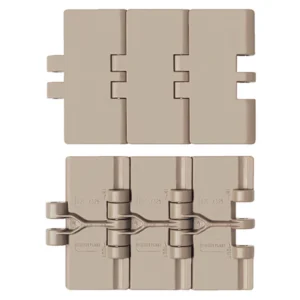
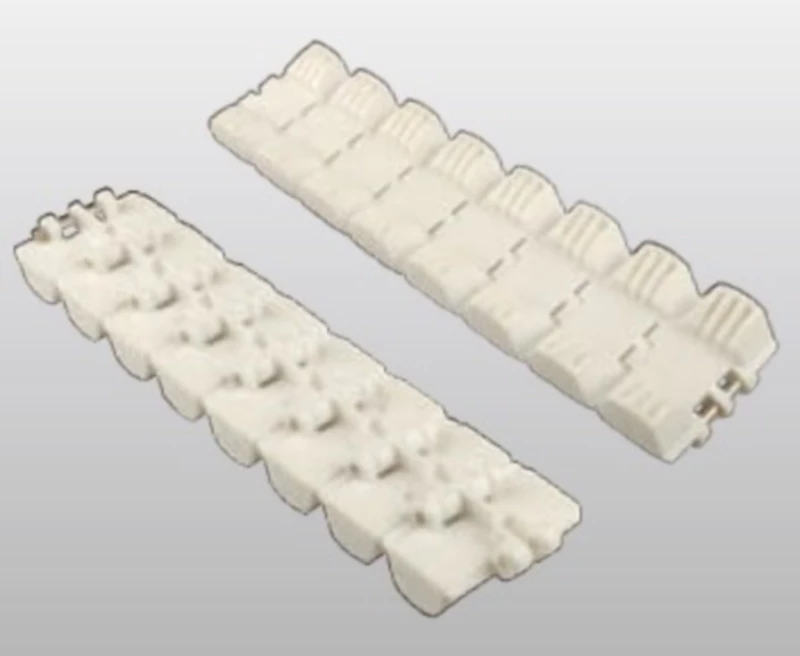
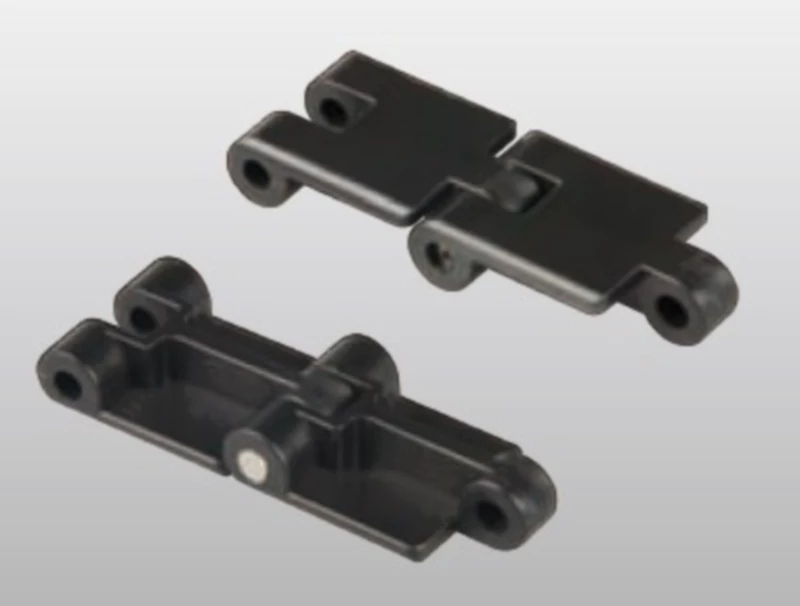
The LF820 plastic flat top chain — the straight-running standard pitch configuration — is the reference product against which all other flat top chains in the EverPower range are measured. It is the System Plast 820 replacement in its most direct form: a 25.4 mm pitch, single hinge, POM-C flat top chain in the full width range from K118 to K1200, with SUS304 stainless steel connecting pins, rated for 60 m/min dry-run and 90 m/min lubricated, with a maximum conveyor length of up to 24 m depending on width and load. EverPower plastic chain Australia Pty Ltd supplies this chain as a precision-matched replacement for System Plast 820 across all standard width designations.
This product page addresses the LF820 as a holistic system — the chain, its operating parameters, the conveyor systems it supports, and the specific performance characteristics that make it the dominant specification in Australian food, beverage, dairy, and pharmaceutical manufacturing. Engineers specifying for the first time, maintenance planners ordering replacement stock, and procurement teams comparing supplier specifications will all find the relevant technical detail here.
Complete Operating Parameters
| Parameter | Value |
|---|---|
| Chain pitch | 25.4 mm (1 inch) |
| Hinge type | Single hinge, stainless steel cross-pin |
| Top plate material | POM-C (natural white standard; black on request) |
| Pin material | Austenitic stainless steel (SUS304) |
| Operating temperature | −40 °C to +90 °C continuous; short-term to +120 °C |
| Max. speed (dry-run) | 60 m/min |
| Max. speed (lubricated) | 90 m/min |
| Max. conveyor run (K118–K600) | ≤24 m |
| Max. conveyor run (K750–K1000) | ≤20 m |
| Max. conveyor run (K1200) | ≤15 m |
| Standard packing | 10 ft (3.048 m) / box; 26 links/m |
| Width range | K118 to K1200 |
The Conveyor Systems LF820 Supports
Flat top chains run in a closed loop between a drive sprocket at one end and a tail sprocket at the other, with the top (carrying) strand supported by UHMWPE wear strips set into the conveyor beam profile, and the return strand supported by idler wheels or a return-strand wear strip on the underside of the beam. The drive sprocket is powered by a geared motor, typically through a direct shaft coupling on single-strand conveyors and through a shaft with multiple sprockets for multi-strand wide-chain installations.
Product is placed on the top strand of the chain and carried at chain speed to the downstream station. In accumulation mode, a stop is placed at the downstream end of the conveyor; the chain continues to run under the accumulated product mass at the same drive speed, with the product sliding on the chain surface. The friction force between product base and chain generates back-pressure on the accumulated column — for standard LF820, this friction-based back-pressure is the primary design constraint on accumulation zone length, with maximum recommended accumulation lengths of 2–3 m for products sensitive to base deformation.
Beverage, Can, and PET Bottle Applications
The most common single application of LF820 in Australia is PET bottle transport on CSD (carbonated soft drink), water, juice, and RTD (ready-to-drink) filling lines. A typical 20,000 bottles-per-hour line uses LF820 K325 or K450 on the single-file sections and K750 or K1000 on the multi-lane transport sections between filler, capper, labeller, and packer. At these speeds and widths, the LF820’s surface flatness tolerance of ±0.3 mm is the key performance specification — it is within the tolerance required by all standard label inspection cameras currently in production use in Australia.
Aluminium can lines also use LF820 extensively, particularly in the packaging section. Filled and seamed cans have a specific base geometry — the countersunk base profile — that benefits from the smooth, continuous POM top surface of the LF820. The POM surface does not generate the metal-transfer marks that steel chain causes on the external base surface of aluminium cans, eliminating a quality defect that causes rejection at retailer DC receiving inspection in Australia’s major supermarket supply chains.
Understanding the K-Width System and Conveyor Frame Compatibility
The K-width designation (K118, K190, K252, K325, K450, K600, K750, K1000, K1200) indicates the nominal chain width in millimetres. This width is matched to the conveyor beam inner width — the distance between the two bearing surfaces inside the beam channel that the chain runs against. For a K325 chain on a correctly sized beam, the chain body clears each beam wall by approximately 0.5–1.5 mm on each side, providing lateral guidance without binding.
A critical distinction for maintenance planners: the K-width designation is a nominal chain measurement, not the beam inner width. The beam inner width is typically 2–4 mm greater than the K-designation to provide the running clearance. When ordering replacement chain, always match the K-designation on the existing chain (visible as a moulded mark on the link underside) — do not measure the beam inner width and treat that as the K-designation, as this will result in ordering the next size up and the chain will be too loose in the beam.
Matched Components EverPower Also Supplies
| Component | Description | Availability |
|---|---|---|
| LF820 Sprockets — full width range | POM and SUS304, all tooth counts K118–K1200 | ✓ In stock |
| LF820 Stainless Connecting Pins | All K-widths, individual and bulk pack | ✓ In stock |
| LF820G Rubber Top Chain | For inclined sections on same conveyor system | ✓ In stock |
| LF820 Mini Flat Top | For small-product sections on the same line | ✓ In stock |
What Our Customers Say
“We run LF820 K450 across 14 conveyors in our CSD filling hall. EverPower has supplied all replacement chain for the past three years. Dimensional consistency between batches is excellent — we have never had a fitment problem on any of the 14 lines. That consistency is what justifies a single-supplier approach.”
— Maintenance Manager, CSD Filling Facility, Sydney NSW
“LF820 K750 on our multi-lane water bottle transport. The POM surface condition after 22 months of operation still reads within the original CoF specification on our tribometer. We expected to replace at 18 months based on our previous supplier’s chain. The EverPower chain is running 4 months longer than our planned replacement cycle.”
— Plant Engineer, Bottled Water Production, Melbourne VIC
“Switched from a different manufacturer’s 820-equivalent to EverPower LF820 on our aluminium can line. The surface marking issue on the can base — which we had with the previous chain — has not appeared in eight months. The POM surface quality is clearly better. No retailer complaints about base marking since the switch.”
— Quality Manager, Beverage Can Production, Brisbane QLD