Description
Product Overview
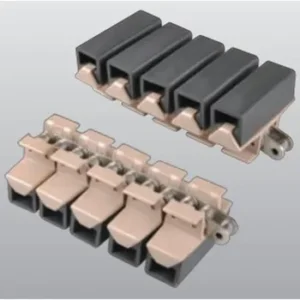
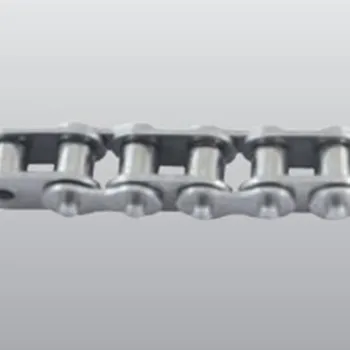
The base roller chain is the foundational structural component of any hybrid plastic conveyor chain system. It provides the tensile strength and dimensional precision that a pure plastic chain cannot achieve at the load ratings required for medium and heavy-duty food, beverage, and industrial conveyor applications. The plastic top layer — whether flat, rubber-top, or gripper — clips or threads onto this steel base, combining the structural capability of steel with the surface properties of engineering plastic.
EverPower plastic chain Australia supplies four base roller chain series — 1873/963, 1843, 863, and 843 — in both SUS304 stainless steel and carbon steel. These are the matched base chains for the LF-series plastic conveyor chain range. They are also supplied as standalone drive chains for applications requiring a standard roller chain in a food-contact grade material without a plastic top surface. Learn more on the About Us page.
Series Specifications
| Series | Pitch | Material | Max Tensile (CS) | Max Tensile (SS) | Compatible Plastic Top |
|---|---|---|---|---|---|
| 1873 (963) | 19.05 mm (3/4″) | SUS304 / Carbon | ≤4,000 N | ≤2,000 N | LF1873, LF3873, 1873 Gripper |
| 1843 | 12.7 mm (1/2″) | SUS304 / Carbon | ≤3,000 N | ≤1,500 N | LF1843 sideflexing series |
| 863 | 19.05 mm (3/4″) | SUS304 / Carbon | ≤4,000 N | ≤2,000 N | LF863 straight-run series |
| 843 | 12.7 mm (1/2″) | SUS304 / Carbon | ≤3,000 N | ≤1,500 N | LF843 straight-run series |
SUS304 vs Carbon Steel: Which to Specify
SUS304 stainless steel is the standard selection for food and beverage contact zones, wet wash-down environments, and any application where corrosion cannot be tolerated. SUS304 contains 18% chromium and 8% nickel, giving it excellent resistance to the alkaline cleaning agents (sodium hydroxide at 1–3%, pH 12–13) used in CIP programmes. It requires no external lubrication in dry-run configurations and maintains structural integrity across the pH range 2–13 without pitting. The trade-off is lower tensile strength than carbon steel at equivalent cross-section — 2,000 N maximum for SUS304 versus 4,000 N for carbon steel in the 1873 series.
Carbon steel suits dry, non-food-contact conveyor zones where maximum tensile load is the primary driver. It accepts higher working loads at lower material cost. However, it requires scheduled lubrication with food-grade H1 oil in any zone near a food product, and shows visible rust within 24–48 hours if immersed or left wet — ruling it out for wet-zone or wash-down applications. A correct lubrication programme extends carbon steel chain service life to 18–24 months in dry mechanical conveyor applications.
Lubrication: The Primary Service Variable
The base roller chain’s primary wear mechanism is pin-to-bushing surface wear. With adequate lubrication, the oil film distributes contact stress and wear proceeds at a manageable rate. Without lubrication — or with degraded or contaminated lubricant — contact stress concentrates on asperities, causing accelerated abrasive wear that manifests as chain elongation.
For food-grade applications, specify NSF H1 (food-grade) lubricant applied via drip, brush, or automatic spray at the point where the chain leaves the drive sprocket. Application rate for a standard duty cycle at 60 m/min is approximately 0.05–0.10 ml per chain metre per hour. Under-lubrication is far more common than over-lubrication in practice — most premature chain failures trace to either missed lubrication intervals or lubricant contamination by CIP wash-down water.
Chain Elongation: The End-of-Life Indicator
Chain elongation — the gradual increase in effective pitch length due to pin and bushing wear — is the primary indicator used to determine when a base roller chain requires replacement. Elongation is measured by comparing the current centre-to-centre dimension across 10 links against the nominal dimension in the datasheet.
Industry practice for conveyor chains is to replace at 2% elongation for standard applications, or 1.5% for precision applications where sprocket tooth engagement accuracy is critical. At 2% elongation on a 1873 chain (19.05 mm nominal pitch), each link has grown by approximately 0.38 mm. Across a 24-metre run with 26 links per metre, that equals roughly 237 mm of cumulative elongation — enough to cause significant catenary sag and, in tight-tolerance systems, sprocket tooth skip under load.
Compatible Plastic Top Layers and Accessories
| Component | Description | Availability |
|---|---|---|
| Plastic Top Inserts (all LF-series) | Flat, rubber-top, and gripper variants | ✓ In stock |
| Connecting Master Links | SUS304 and carbon steel, all pitches | ✓ In stock |
| Matched Sprockets | 1873 and 843/863/1843 pitch, all tooth counts | ✓ In stock |
| Chain Tensioners | Adjustable slack-side tensioner assemblies | ✓ On request |
What Our Customers Say
“We order the 1873 SUS304 base chain in 50-metre quantities for our chicken processing line. Corrosion resistance through daily sodium hydroxide wash-down has been faultless over 20 months. Never had a single chain failure at a link.”
— Maintenance Planner, Poultry Processing Facility, Toowoomba QLD
“We buy the base chain and plastic top inserts separately and assemble in-house. The dimensional consistency of the EverPower base chain — pin diameter, bushing bore, plate hole position — is tight enough that we never need to adjust our assembly jig between batches.”
— Technical Buyer, Conveyor OEM Manufacturer, Melbourne VIC
“843 carbon steel base chain on our dry biscuit packaging line — 18 months service, measured elongation at 1.1%, still well within the 2% replacement threshold. We will get 24 months easily on this chain at the current rate.”
— Production Engineer, Biscuit Manufacturing, Sydney NSW