Description
Product Overview
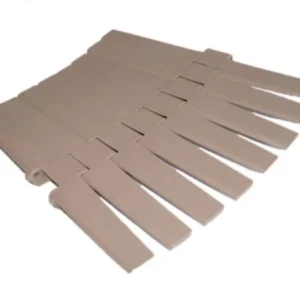
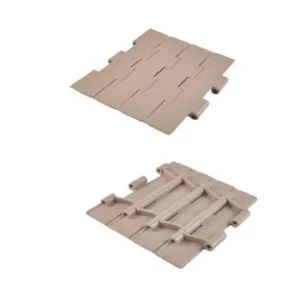
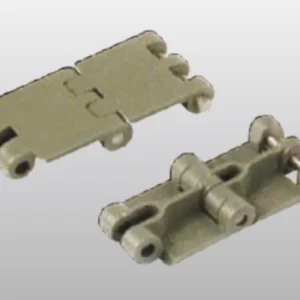
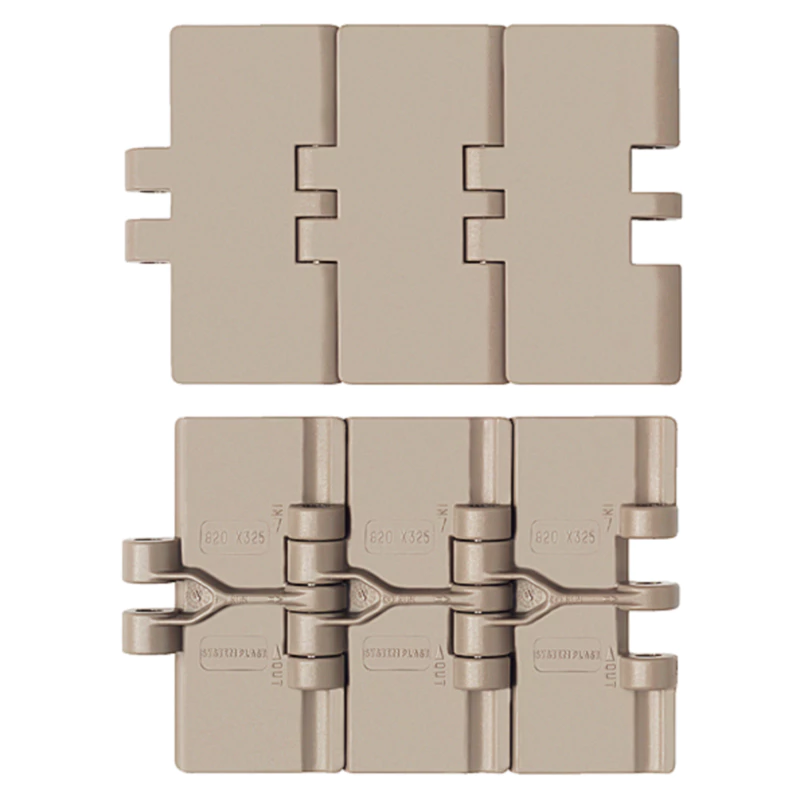
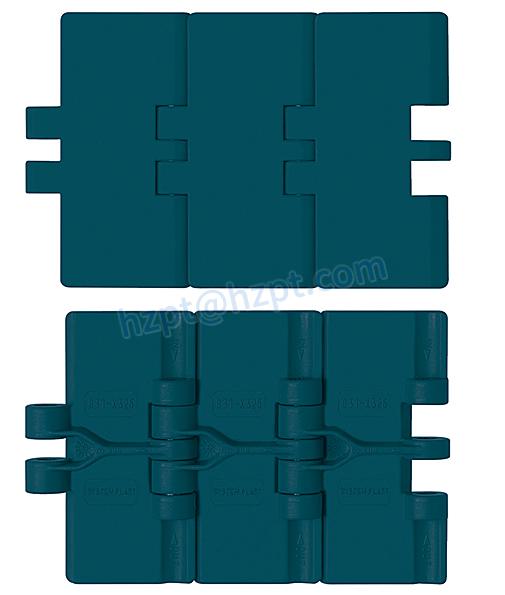
Single hinge straight running plastic flat top chains are the workhorse of the food and beverage conveyor industry. The single hinge design — where each link articulates at one central hinge point rather than two — produces a chain with superior column strength in the running direction and a predictable, low-friction slide against aluminium or UHMWPE guide rails. These characteristics make single hinge chains the first-choice specification for straight conveyor runs in bottling, canning, pharmaceutical filling, and food packaging lines worldwide.
EverPower plastic chain Australia Pty Ltd supplies single hinge straight running flat top chains across the LF520, LF810, LF820, and LF831 series — direct-fit replacements for System Plast equivalents. Manufactured from POM acetal plate with austenitic stainless steel hinge pins, these chains meet the food-contact and corrosion-resistance requirements of Australian food manufacturing under FSANZ Standard 3.2.3.
Series Specifications
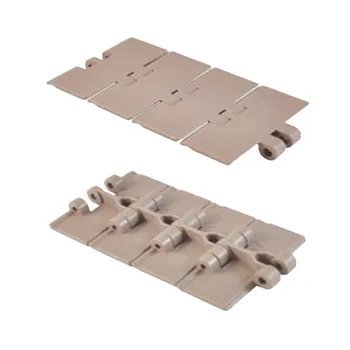
The four LF-series single hinge chains cover the most common conveyor widths from 50 mm (LF810) to the wider LF831 format. Each series has a fixed pitch and compatible sprocket range. Selecting the correct series requires matching three parameters: the required conveyor width, the product weight per metre of chain, and the maximum conveyor speed.
| Series | Nominal Width | Pitch | Max Speed (lub.) | Max Speed (dry) | Working Load | Max Run | Links/m |
|---|---|---|---|---|---|---|---|
| LF520 | 82.6 mm (3.25″) | 25.4 mm | 80 m/min | 50 m/min | 1,250 N | 12 m | 39 |
| LF810 | 50 mm (2″) | 25.4 mm | 80 m/min | 50 m/min | 800 N | 8 m | 52 |
| LF820 | 82.6 mm (3.25″) | 25.4 mm | 90 m/min | 60 m/min | 2,250 N | 12 m | 39 |
| LF831 | 82.6 mm (3.25″) | 25.4 mm | 80 m/min | 50 m/min | 2,250 N | 12 m | 39 |
LF820 vs LF831: Understanding the Key Difference
The LF820 and LF831 share the same nominal width and working load, but differ in their top plate geometry and hinge design. The LF820 uses a standard flat top plate with a polished POM surface and a single central hinge pin. The LF831 features a modified top plate with a slightly different plate overlap geometry that provides improved surface continuity at the hinge zone — reducing the micro-gap that appears between link edges at low speeds on an LF820. This makes the LF831 the preferred choice for small-diameter containers (below 40 mm base) and pharmaceutical tablets or capsules where the micro-gap in the LF820 could cause product to tilt or catch.
At speeds above 60 m/min, the micro-gap issue becomes less significant because the product crosses the hinge zone before it has time to tilt. In these conditions, the LF820’s higher rated speed (90 m/min lubricated versus 80 m/min for the LF831) makes it the preferred specification for high-speed beverage filling lines. Both chains use the same sprocket and guide rail profile — allowing mixed installation on a conveyor where different sections have different speed requirements.
Why Single Hinge Outperforms Double Hinge for Straight Runs
Double hinge chains (where each link articulates at two hinge points) are designed for sideflexing applications — the two hinge points allow the chain to curve horizontally. On a straight run, this additional articulation provides no benefit but introduces two additional wear surfaces per link instead of one. Over a 12-month operating cycle at 60 m/min on a 12-metre conveyor run, a double hinge chain accumulates approximately 30% more pin-bore wear than an equivalent single hinge chain at the same working load. The single hinge design is mechanically optimal for straight-run applications and should always be specified where no horizontal curves are present.
The column stiffness advantage of single hinge chains also improves behaviour at the drive sprocket. Because the chain resists lateral buckling more strongly than a double hinge equivalent, it tracks more cleanly across the sprocket face at high speeds — reducing the side-to-side oscillation (hunting) that causes accelerated edge wear on the guide rail and premature link plate fatigue.
Food Safety and Cleanability
Single hinge chains pass beneath product in the return strand, where they are exposed to the full force of overhead wash-down nozzles. The single central hinge pin design creates a simpler internal geometry than double hinge chains — with fewer interstices where product debris, biofilm, or cleaning agent residue can accumulate. This simplification directly supports compliance with FSANZ Food Safety Standard 3.2.3 and Codex Alimentarius hygiene guidelines for food handling equipment.
POM plate material resists chemical attack from the dilute phosphoric acid (0.5–1.5%), sodium hydroxide (1–3%), and quaternary ammonium sanitisers used in standard food plant CIP programmes. Post-CIP moisture retention at the hinge pin is the primary microbiological risk — ensure the chain’s return strand is positioned to allow gravity drainage rather than pooling at each hinge point.
Matched Components and Spare Parts
| Component | Description | Availability |
|---|---|---|
| Sprockets (LF520/810/820/831) | 25.4 mm pitch, matched tooth profile, PA66 and SUS304 | ✓ In stock |
| Idler Wheels | Return strand support, plastic body, SUS304 axle | ✓ In stock |
| UHMWPE Wear Strips | For aluminium beam guide rail inserts | ✓ On request |
| Connecting / Master Links | SUS304 pin, all LF-series compatible | ✓ In stock |
What Our Customers Say
“LF820 on our high-speed water bottling line at 85 m/min. The chain has been running 13 months without any tracking adjustments. Motor current is stable — no signs of increased chain friction. Very pleased with the surface quality compared to our previous supplier.”
— Production Manager, Bottled Water Plant, Sydney NSW
“We specified LF831 for our blister-pack pharmaceutical line because of the small pack size. No tilt events at the hinge zone in 8 months. The chain surface stays clean after CIP and the audit team flagged it as best-practice equipment.”
— Validation Specialist, Pharmaceutical Manufacturer, Melbourne VIC
“LF520 on a narrow-format canned soup line — exactly the width we needed. EverPower provided the full technical datasheet within 24 hours of inquiry and delivered within the week. The chain fitted our existing sprockets with zero modification.”
— Maintenance Planner, Canned Food Facility, Perth WA